Yield loss is not spread evenly across all processes; it usually concentrates in two or three places. Counting losses by process is far more useful than repeating that yield is low.
Which three processes does the loss usually concentrate in?
Magnetic circuit assembly, voice coil lead and diaphragm bonding, and final press-fitting. The first two decide electro-acoustic performance, the third decides appearance and reliability. The three fail differently and are handled differently.
Magnetic circuit: gap or concentricity, which matters more?
Both, though not at the same time. An uneven gap makes the voice coil rub; poor concentricity makes the coil drift at both ends of its travel even with an even gap. Upstream of the magnetic circuit is the incoming material: the dimensional spread of magnets and washers has to be controlled first. A fixture can narrow the spread; it cannot remove the spread that is in the parts.
Why do voice coil leads cause trouble so often?
The wire is fine, the solder joint is small, and the routing space is narrow. Unstable soldering temperature and time produce cold joints; without a fixed routing path the lead gets pinched or pulled during assembly and breaks. These defects often appear within hours, or only at the customer, so pull testing or continuity sampling is needed.
Final press-fitting: force or position?
Most micro parts are pressed to position with force monitored. Pressing to force gives inconsistent compression when incoming thickness varies. After pressing, adhesive curing has to be checked too: under-cured parts spring back after resting and the readings drift.
How should the yield target be set?
By process, not for the whole line. Line yield is the product of station yields; set a single line target and nobody knows what to change. A workable approach is a scrap limit per station, and when it is exceeded you investigate that segment first. The other precondition is a shared definition: what counts as scrap, who decides, and where it is recorded. Leave those three open and the numbers cannot be compared.
Why is equipment accuracy not the primary variable?
Because most defects come from incoming variation and process parameter drift, not from the positioning accuracy of the machine itself. Beyond a certain point, more accuracy brings very little marginal improvement. Do the counting by process and the incoming material control first, then talk about upgrading equipment.
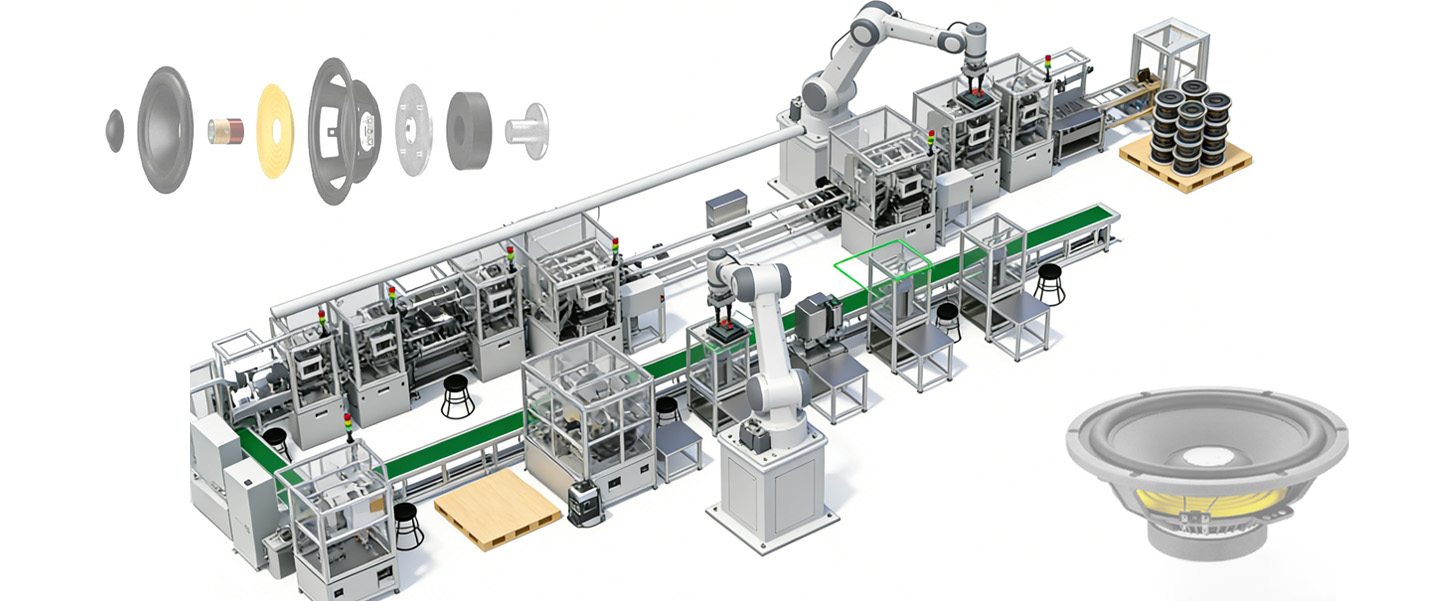
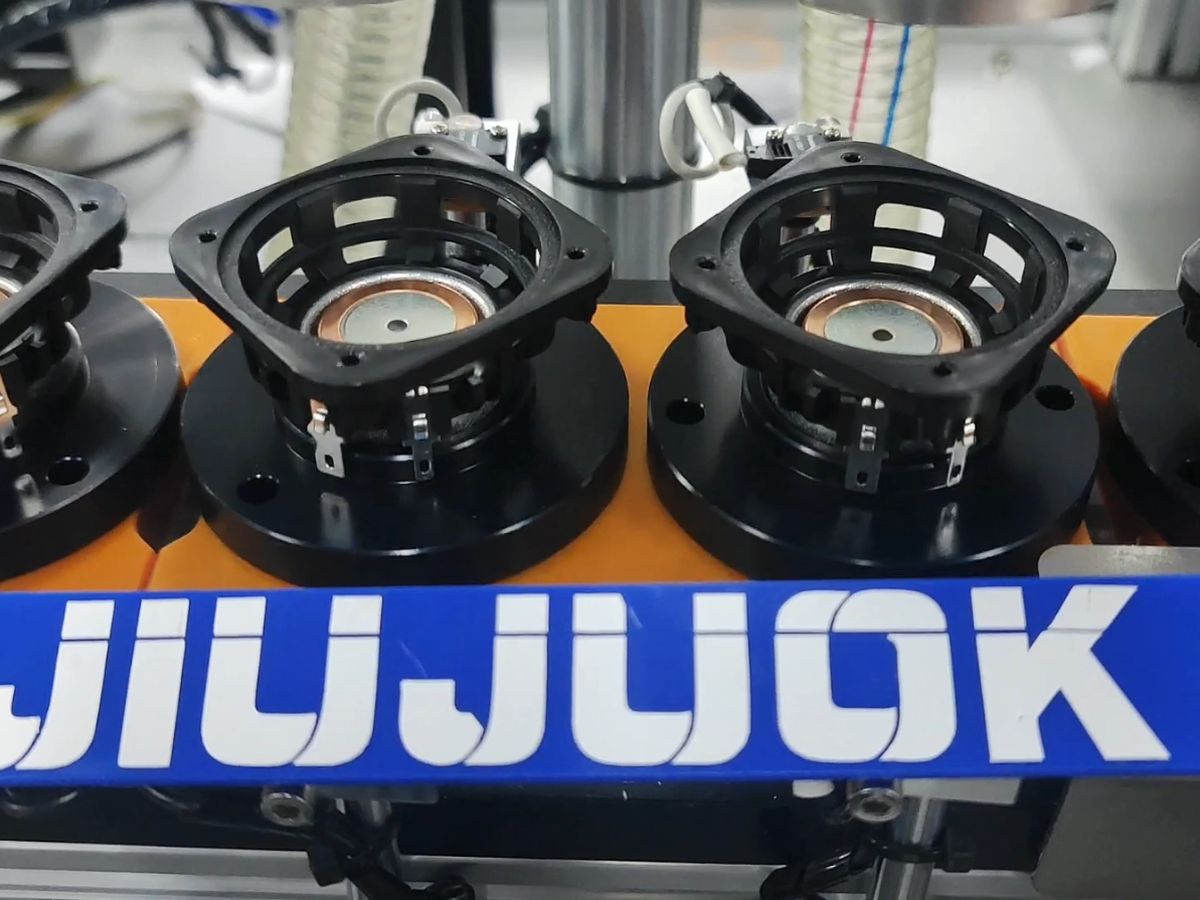
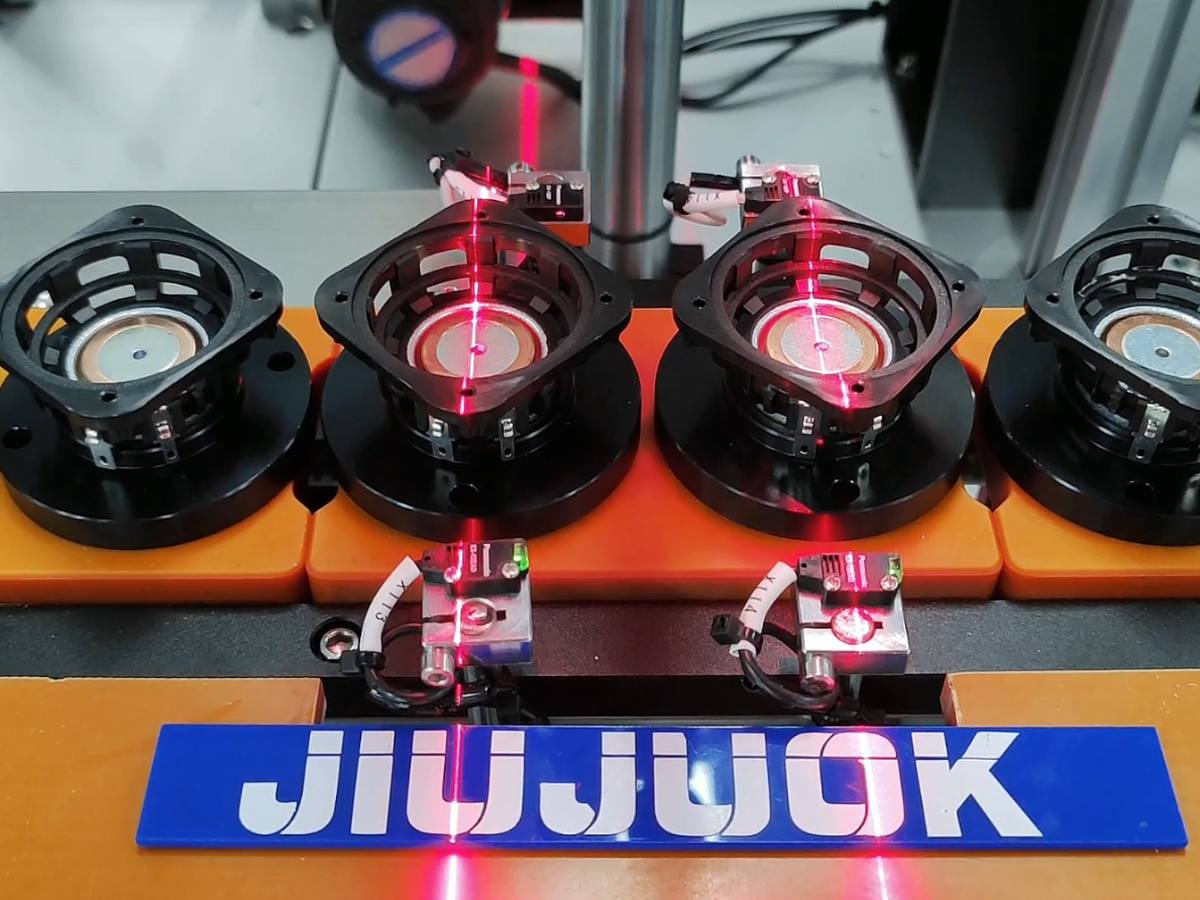
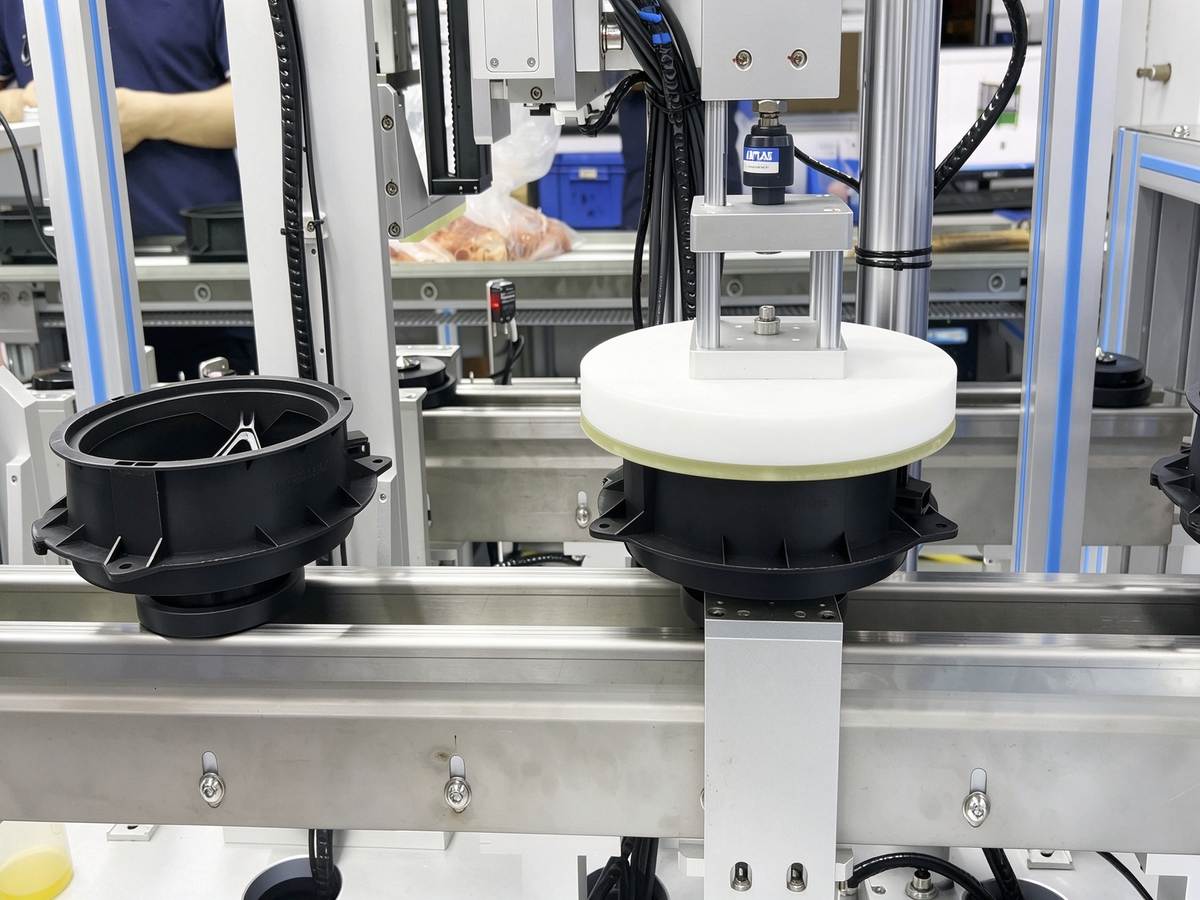
Counting by process has to reach the shop floor.Headphone Speaker Automation Production LineOn lines of this kind, the magnetic circuit, the lead and the press-fitting are three separate stations, and each has to count and scrap independently; the stability of the magnetic circuit station depends on the locating and pressing method of theSpeaker Internal-magnet Automatic Magnetic Circuit Machine; the press-fitting station depends on the stroke repeatability and stop reliability of equipment such as theSpeaker Automation Riveting Machine. Only when the three stations' data can be read separately do you know which segment to change.
 Speaker automation jiujuauto









 简体中文
 English
 Tiếng Việt
 日本語
 한국어
 ไทย
 हिन्दी
 বাংলা
 Français
 Español de Perú
 Русский