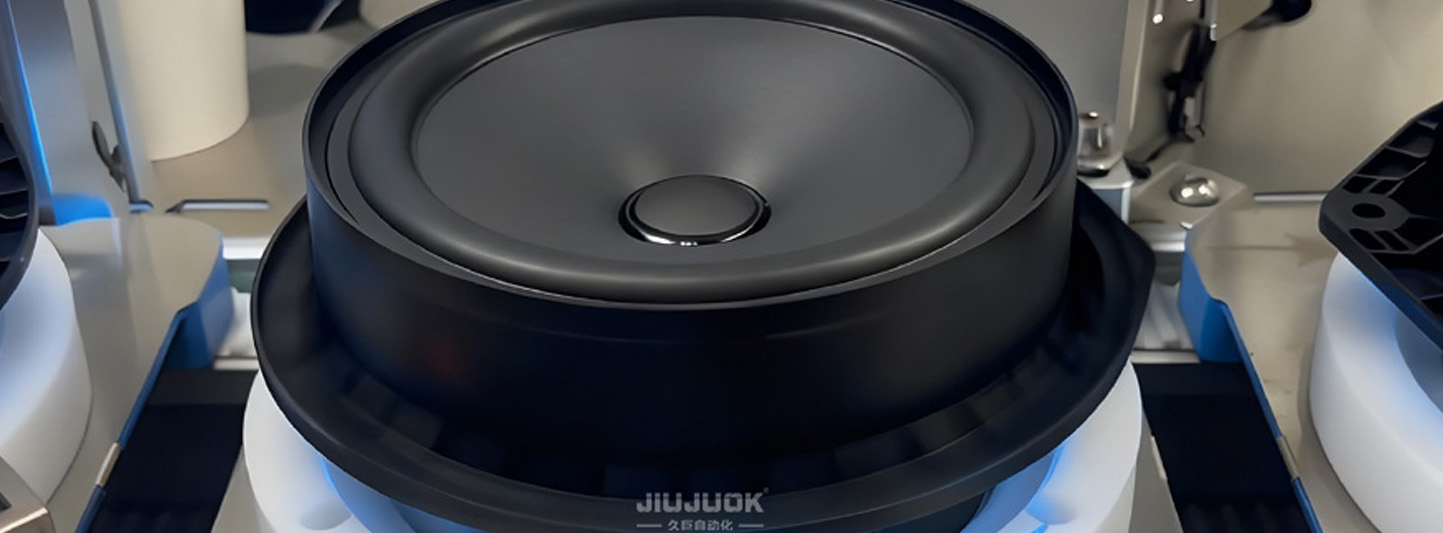
JiuJu Automation focuses on the intelligent upgrading of the whole process of speakers, integrating the four core technologies of visual inspection, precision assembly, AI quality inspection and data traceability to provide customized solutions for TWS headphones, car audio, multimedia smart audio speakers, etc., and achieve production capacity increase of 300%+, yield rate of 99.8%, and reduce the comprehensive cost of 60%, completely solving the pain points of the industry, such as manual dependence, stable quality control and delivery cycle. dependence, unstable quality control, long delivery cycle and other industry pain points. Based on the product characteristics and production scenarios of speakers, it creates a full-process automation system from the entry of raw materials to the release of finished products from the warehouse, covering the three major categories of micro, small and medium-sized, and adapting to the needs of multi-specification and multi-batch production.
Q: What are the risks associated with investing in speaker automation equipment? How can these risks be assessed and addressed?
A: Investment in speaker automation equipment does carry a certain degree of risk and requires comprehensive risk assessment and effective risk control. The following are the main risk factors and coping strategies:
Technology risk: 1. Technology replacement risk: Automation technology is evolving rapidly and equipment can become obsolete very quickly. 2. Technology maturity risk: new technologies may have stability and reliability issues. 3. Technology adaptability risk: equipment may not be able to meet the needs of product upgrades and process improvements.
Coping Strategies: 1. Selection of technologically advanced and proven equipment suppliers. 2. Concerned about the technological upgradability and scalability of the equipment. 3. Establish long-term relationships with suppliers to ensure technical support.
Market risk: 1. Risk of changes in market demand: market demand may change, affecting equipment utilization. 2. Risk of increased competition: Increased competition in the market may lead to lower product prices. 3. Policy change risk: Changes in relevant policies may affect the development of the industry. Coping Strategies: 1. Conduct adequate market research and analysis. 2. Select equipment with good market prospects. 3. Pay attention to policy changes and adjust development strategies in a timely manner. Financial risk: 1. Payback period risk: The payback period may be longer than expected. 2. Risk of financial pressure: Large investment in equipment may cause financial pressure. 3. Operating cost risk: equipment operating costs may be higher than expected. Coping Strategies: 1. Conduct detailed financial analysis and return on investment assessments. 2. Rationalization of funds to avoid over-investment. 3. Select cost-effective equipment to control operating costs. Through comprehensive risk assessment and effective risk control, the risk of investing in speaker automation equipment can be reduced and the success rate of investment can be improved.
Core view:
Core view: There are technical, market and financial risks in the investment of speaker automation equipment, which need to be comprehensively assessed and effectively controlled. Selecting suitable equipment suppliers, conducting sufficient market research and rationalizing capital arrangement are the keys to reducing risks.
JiuJi Automation Advantage:
Frequently Asked Questions FAQ
Click a question to expand the answer
01When evaluating investment in a speaker automated assembly line, what should be examined first?
The bottleneck process, not the total price.A complete-line quotation is driven heavily by configuration — whether acoustic testing, leak testing and AOI stations are included — and the same product can differ by several hundred thousand yuan. Establish first which process is the bottleneck and how much automation can improve it, then discuss configuration and price; in the reverse order you pay for functions you do not need.
02What are the main cost blocks?
Four, as a rule: the equipment itself, tooling and fixtures, site services (power, compressed air, flooring, dust extraction), and commissioning and training.The second is the most commonly underestimated: multi-variant production requires tooling per model, and the price and lead time of each set affect the overall schedule. Exact figures are costed per project; this site does not publish blanket line prices.
03How is payback calculated?
Add two benefit streams and divide by the investment:Capacity benefit = (new cycle time − current cycle time) × available hours × yield improvement; defect-cost saving = existing defect rate × output × loss per unit − post-automation defect cost. This site does not quote a single payback figure in months, because the result depends on local labour cost, capacity utilisation, unit price and the defect rate of the existing line — change any one and the conclusion changes.
04Why can capacity benefit not be calculated directly from a multiple of efficiency?
Because rated capacity is not effective output.Effective capacity = cycle rate × uptime × yield. At 1000 PCS/H, 85% uptime and 99.5% yield, effective output is about 846 PCS/H. Using the rated figure shortens the estimated payback by more than 20% — the most common calculation error in this type of appraisal.
05How should labour cost be calculated so that nothing is omitted?
Beyond wages, include recruitment, training, supervision, rework and the risk of workplace injury.Hidden costs on a manual line are usually absorbed into overhead, so no single line item shows them and they are easily underestimated. The other side must be counted too: an automated line still needs operators, patrol inspection and maintenance staff — it is not zero labour. The manning ratio is confirmed by machine model and shift pattern.
06What happens if uptime is estimated inaccurately?
It invalidates the payback calculation outright.Every 10 percentage points lost on uptime reduces effective output in proportion, while depreciation and floor-space cost stay fixed. The company's published figure is ≥85% uptime, but that figure has to be supported by changeover frequency, breakdown downtime and incoming-material stability — it is not reached automatically by buying the machine.
07Where does the risk lie in high-mix, low-volume production?
In changeover loss.Changeover on an automated line takes 20 to 60 minutes depending on model and tooling count, usually longer than on a manual line. The criterion is to calculate changeover loss first: changeover time × changeover frequency ÷ available hours. The advantage is clearest in single-variant, high-volume production; in high-mix low-volume work, changeover loss can consume most of the efficiency gain.
08What is the biggest technical risk in machine selection?
Paying a premium for universality, and ending up with nothing running stably.A machine's capability envelope is largely set by its tooling: magnetic-circuit fixtures, dispensing needles and magnetizing fixtures are all custom parts, and non-standard products need separate design and validation. List your main models clearly and tool for those; it works out better than buying one machine that claims to do everything.
09Which protective clauses belong in the contract?
Four acceptance metrics are recommended:(1) cycle-time attainment; (2) yield (good units ÷ units fed, measured by batch and broken down by defect mode); (3) OEE; (4) changeover time. Add two more: volume validation over a continuous 72-hour run, and the incoming-inspection standard together with allocation of responsibility. If the definitions are not written down, the same figure can differ by a factor of two at acceptance.
10How should phased investment be structured to limit risk?
Follow a single-machine-first, full-line-later path:Buy one machine to relieve the most painful bottleneck, run it for 1 to 2 months to verify cycle time and yield, then decide whether to extend to a full line. The equipment is modular and can later be integrated as a station within a complete line, so phased investment does not create duplicated spending.
11Which risks does a trial run reduce?
It exposes incoming-material compatibility and tooling fit early — precisely the main risks outside the machine itself.Trial runs are supported: free for standard machines with regular workpieces, taking 3 to 10 working days; non-standard tooling is charged as usual and credited against the order once placed. A trial produces a test record and is the most direct basis for judging feasibility.
12When is automation not advisable?
Three situations call for caution: very low annual volume combined with frequent changeovers; poor incoming consistency that cannot be improved in the short term; and products still being revised frequently.In these three cases equipment investment easily becomes a sunk cost. Standardising incoming material and freezing the process first is usually more effective than buying a line outright.
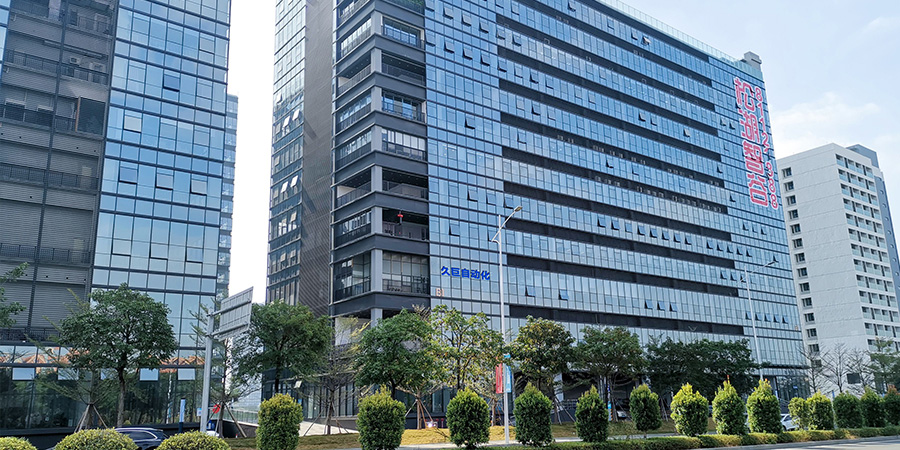
Jiuju Automation is an SRDI “Little Giant” Enterprise and has specialised in speaker automated assembly for 16 years, serving more than 2,500 customers. The company holds 256 technical patents and operates a 10,000 m² production base, offering one-stop solutions from standalone equipment to complete automated lines. Jiuju speaker automated assembly lines use high-precision vision positioning (±0.01 mm), AI-based inspection and fast changeover (<25 minutes), raising production efficiency by 300%+ and achieving a product yield of 99.8% with a 60% reduction in overall cost.
 Speaker automation jiujuauto












 简体中文
 English
 Tiếng Việt
 日本語
 한국어
 ไทย
 हिन्दी
 বাংলা
 Français
 Español de Perú
 Русский