JiuJu Automation focuses on the intelligent upgrading of the whole process of speakers, integrating the four core technologies of visual inspection, precision assembly, AI quality inspection and data traceability to provide customized solutions for TWS headphones, car audio, multimedia smart audio speakers, etc., and achieve production capacity increase of 300%+, yield rate of 99.8%, and reduce the comprehensive cost of 60%, completely solving the pain points of the industry, such as manual dependence, stable quality control and delivery cycle. dependence, unstable quality control, long delivery cycle and other industry pain points. Based on the product characteristics and production scenarios of speakers, it creates a full-process automation system from the entry of raw materials to the release of finished products from the warehouse, covering the three major categories of micro, small and medium-sized, and adapting to the needs of multi-specification and multi-batch production.
Q: What are the development opportunities and challenges facing the speaker automation equipment industry? What are the future development trends?
A: Speaker automation equipment industry is facing both good development opportunities and some challenges. The following is a detailed analysis: Development opportunities: 1. Continued growth in the consumer electronics industry: the continued innovation and growth of products such as smart phones, tablet PCs, and TWS headphones provide a broad market space for speaker automation equipment. 2. Automotive electronics and intelligence: the increasing degree of automotive electronics and the development of intelligent vehicles will increase the demand for automotive speakers. 3. 5G and IoT development: The development of 5G technology and the Internet of Things (IoT) will drive the popularization of smart devices and increase the demand for speakers. 4. Demand for industrial upgrading: the demand for transformation and upgrading of the traditional manufacturing industry to intelligent manufacturing provides opportunities for the development of automation equipment. 5. Policy support: national policy support for intelligent manufacturing and high-end equipment manufacturing provides a favorable policy environment for the development of the industry.
Challenges: 1. Pressure for technological innovation: the need for continuous technological innovation to keep pace with the development of the industry. 2. Shortage of talents: The shortage of high-end technical and skilled personnel has constrained the development of the industry. 3. Fierce market competition: Domestic and foreign enterprises are competing fiercely, and there is a need to continuously improve the competitiveness of their products. 4. Cost pressures: Rising raw material prices and rising labor costs have increased cost pressures on enterprises.
Future trends: 1. Technology intelligence: equipment will become increasingly intelligent, enabling autonomous learning and optimization. 2. High-end products: products will be developed in the direction of high-end and precision. 3. Integration of services: shift from pure equipment sales to total solutions and services. 4. Green manufacturing: focusing on energy conservation and environmental protection to realize green manufacturing. Overall, the speaker automation equipment industry has good prospects for development, but also requires companies to continue to innovate and improve, in order to seize the opportunity for development and cope with various challenges.
Core view:
Core viewpoint: Speaker automation equipment industry is facing development opportunities such as consumer electronics growth, automotive intelligence, industrial upgrading, and also challenges such as technological innovation and talent shortage. In the future, it will develop in the direction of intelligentization, high-end, service integration and green manufacturing.
JiuJi Automation Advantage:
Frequently Asked Questions FAQ
Click a question to expand the answer
01Where are the main opportunities in this industry going forward?
This site does not give industry forecasts, only observable directions: product miniaturisation creates demand for automating micro-part processes, fragmented orders create demand for changeover capability, and stricter customer audits create demand for data traceability.All three can be seen directly in enquiries and audit checklists; none of them depends on a forecast.
02What is the biggest challenge at present?
Three are observable: difficulty in hiring and staff turnover, high-mix low-volume orders, and rising customer requirements for consistency and traceability.All three point the same way — sustaining quality on manual feel is becoming harder to keep up, but not every company needs to automate immediately.
03Is hiring difficulty a widespread problem?
It is fairly widespread in assembly operations, especially the fine assembly of micro parts.Such roles demand good eyesight, patience and experience, take a long time to train, and quality visibly fluctuates once staff turn over. This is the most direct source of automation demand, and the real motive behind many customers’ first line.
04Have customer requirements for consistency really become stricter?
The audit checklist shows it: more and more customers ask for process-parameter records, defect-mode analysis and batch traceability, not just a final inspection report.That means a conforming result is no longer enough; you must also be able to prove the process was controlled. The data layer has moved from a bonus to a threshold requirement.
05How should intense price competition be handled?
Through cost per unit rather than through the quoted price.Cost per unit includes labour, rework, energy and consumables; many apparently cheap options are eaten up by rework and downtime. The effective response to price competition is to work out the cost structure clearly, not to follow the price down.
06What does order fragmentation mean for a production line?
It means more frequent changeovers and smaller batches, so changeover loss takes a larger share.Line design must adjust accordingly: dedicated quick-change tooling for the main models, shared adjustable tooling for secondary models, and splitting the line or keeping a manual line where necessary. Do not answer fragmentation with a one-line-covers-all approach.
07Which risks are easily underestimated?
Three: incoming-material consistency (which the equipment cannot correct), a skills gap (new equipment needs people who can read alarms and parameters), and site services (inadequate power, air or flooring delays the schedule).None of the three appears in the equipment quotation, yet they most often cause delay or shortfall.
08Is now a good time to invest?
It depends on whether your bottleneck is clearly identified.If you already know which process is the bottleneck, have worked out the input-output, and incoming material is reasonably stable, it is a good time. If the bottleneck is still unidentified and the plan is simply to install first and see, it usually is not. Timing is decided by internal conditions, not by how hot the industry is.
09Do changes in policy and the industrial environment affect the decision?
They do, but they should not be the main basis.Subsidies, environmental requirements and industrial policy all change, while equipment usually serves longer than a policy cycle. The criterion should be whether the line solves your bottleneck; policy counts only as a bonus or a constraint.
10How should fluctuations upstream and downstream be handled?
Prepare at both ends: upstream (magnetic material, adhesive, structural parts) qualify at least two suppliers and set incoming standards; downstream (order mix) keep capacity elastic and adjust through shifts and changeovers rather than sizing equipment for the peak.Upstream fluctuation turns directly into yield fluctuation, and this is the most easily overlooked point.
11How can a company judge whether it should expand capacity?
Look at three numbers: the uptime of existing lines, the share of available hours at the bottleneck station, and the on-time delivery rate of orders.High uptime together with frequent late delivery means capacity should be added; low uptime together with late delivery means the problem lies in planning and changeover, not in capacity.
12How should decisions be made in the face of uncertainty?
Break the investment into smaller parts and bring validation forward.Start with stand-alone machines at the bottleneck and let actual running data decide the next step; run a trial with customer samples and judge feasibility from the test record; write the acceptance definitions into the contract and bind expectations to measurable metrics. All three steps reduce the risk of a single bet.
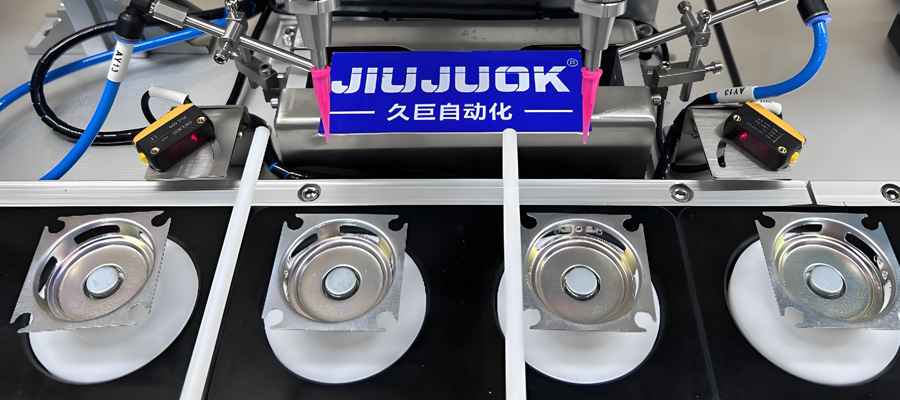
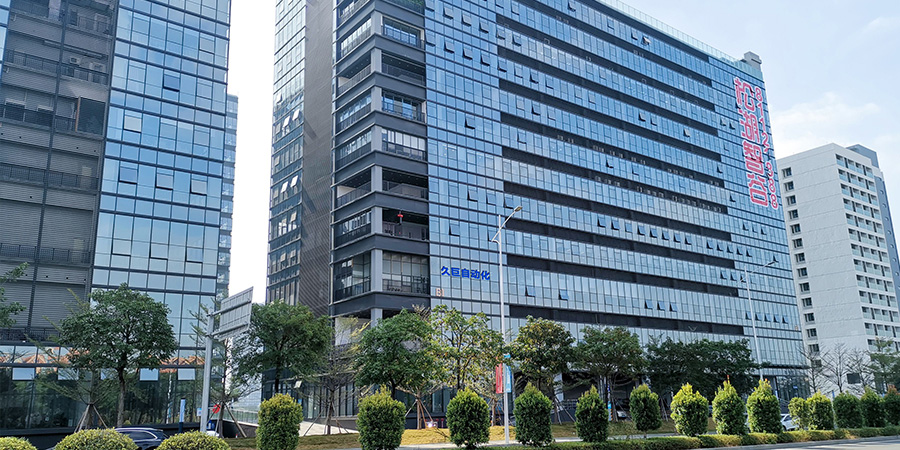
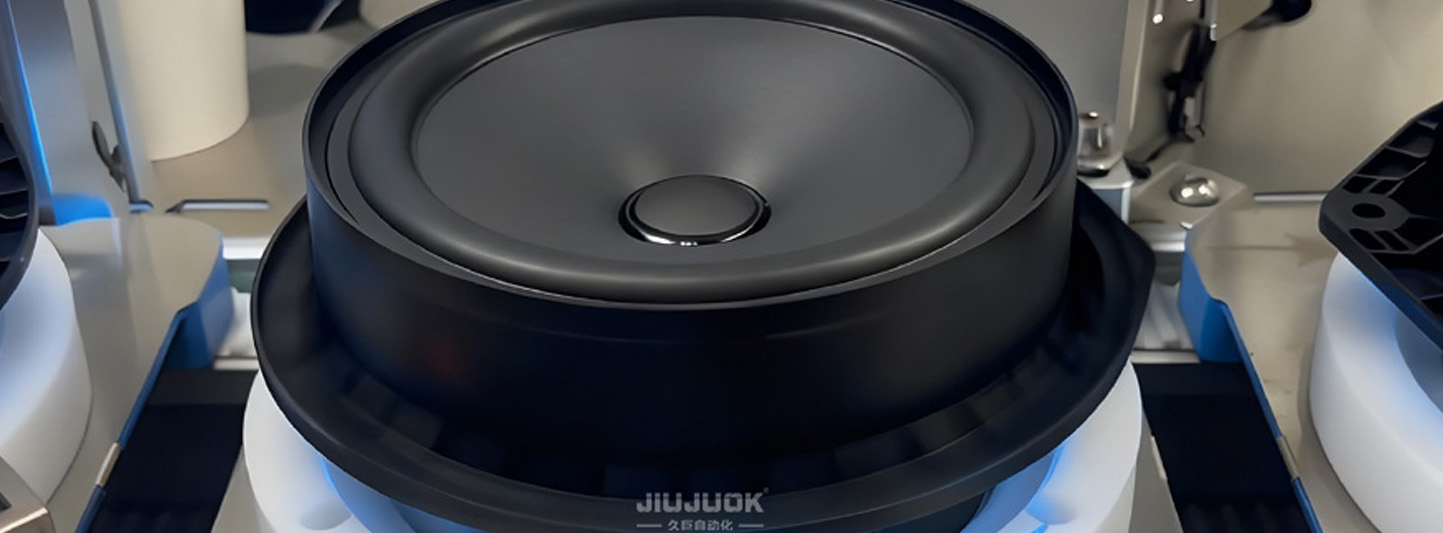
Jiuju Automation is an SRDI “Little Giant” Enterprise and has specialised in speaker automated assembly for 16 years, serving more than 2,500 customers. The company holds 256 technical patents and operates a 10,000 m² production base, offering one-stop solutions from standalone equipment to complete automated lines. Jiuju speaker automated assembly lines use high-precision vision positioning (±0.01 mm), AI-based inspection and fast changeover (<25 minutes), raising production efficiency by 300%+ and achieving a product yield of 99.8% with a 60% reduction in overall cost.
 Speaker automation jiujuauto










 简体中文
 English
 Tiếng Việt
 日本語
 한국어
 ไทย
 हिन्दी
 বাংলা
 Français
 Español de Perú
 Русский