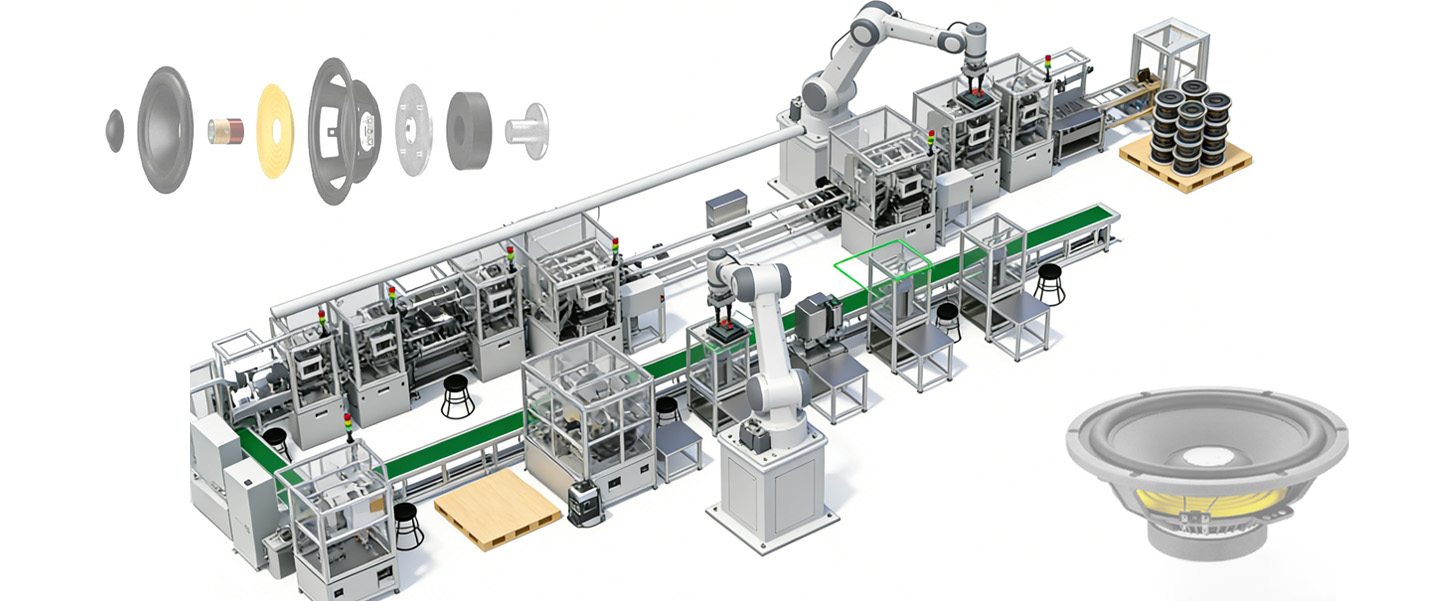
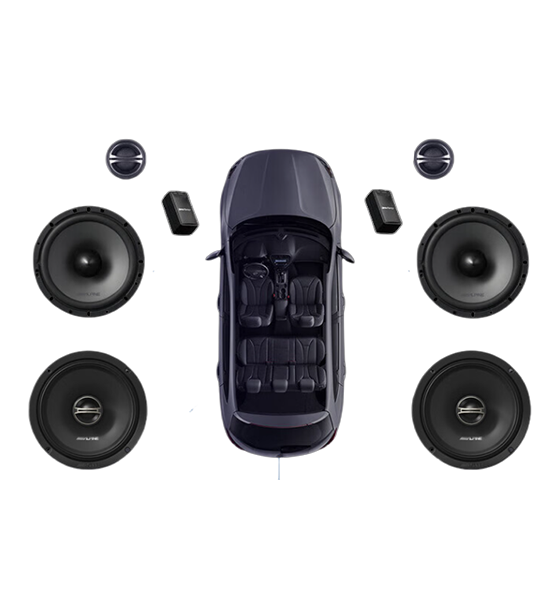
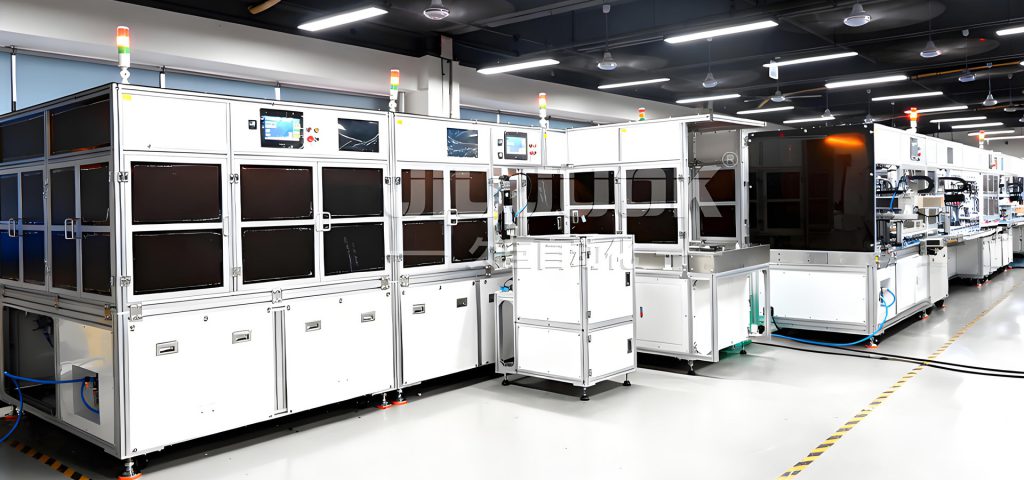
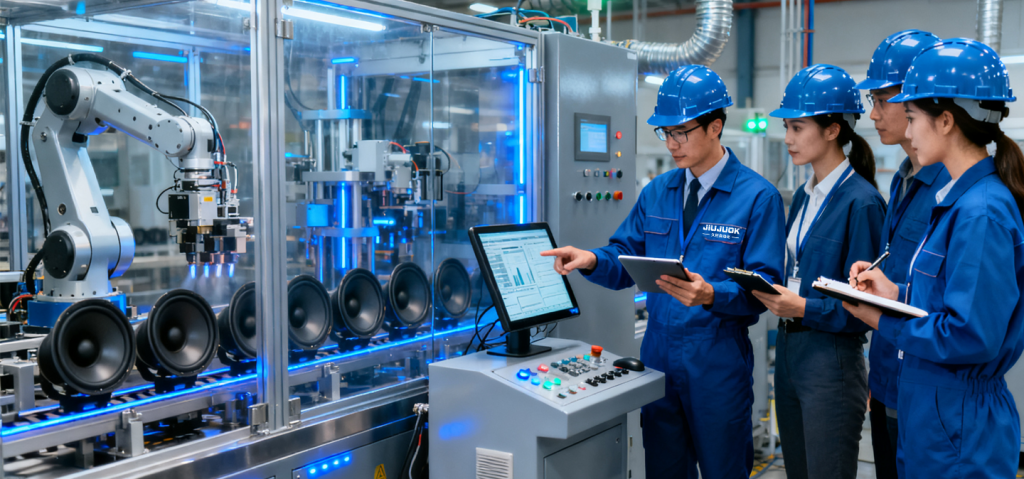
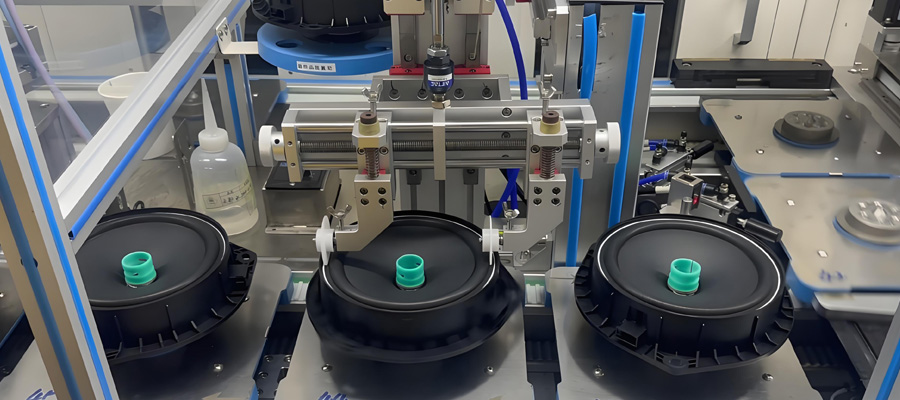
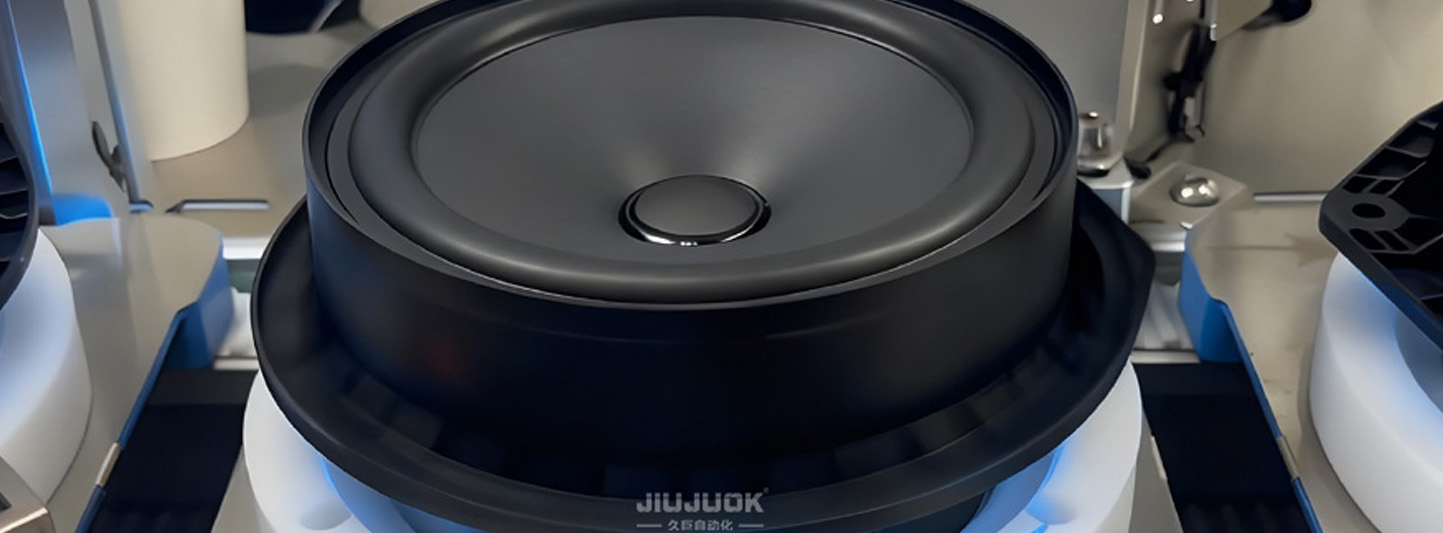
JiuJu Automation focuses on the intelligent upgrading of the whole process of speakers, integrating the four core technologies of visual inspection, precision assembly, AI quality inspection and data traceability to provide customized solutions for TWS headphones, car audio, multimedia smart audio speakers, etc., and achieve production capacity increase of 300%+, yield rate of 99.8%, and reduce the comprehensive cost of 60%, completely solving the pain points of the industry, such as manual dependence, stable quality control and delivery cycle. dependence, unstable quality control, long delivery cycle and other industry pain points. Based on the product characteristics and production scenarios of speakers, it creates a full-process automation system from the entry of raw materials to the release of finished products from the warehouse, covering the three major categories of micro, small and medium-sized, and adapting to the needs of multi-specification and multi-batch production.
Q: How can speaker automation equipment realize flexible production? What are the key technologies and methods?
A: Speaker automation equipment to achieve flexible production requires the use of a variety of technologies and methods, mainly including the following aspects: Modular design technology:
1. Equipment modularization: the equipment is broken down into multiple functional modules, each of which can be worked and replaced independently. 2. Process modularization: the production process is decomposed into a number of process modules to realize the flexible combination of processes. 3. Control system modularization: the use of modular control system to achieve flexible configuration of functions.
Rapid changeover technology: 1. Quick mold change system: adopting quick mold change device to realize quick change of molds. 2. Automatic adjustment of parameters: the equipment can automatically adjust the process parameters according to the product type. 3. Automatic program switching: the equipment can automatically switch the production program according to the product type.
Intelligent Dispatch System: 1. Intelligent scheduling of production plans: Intelligent scheduling of production plans based on order requirements. 2. Intelligent allocation of equipment resources: Intelligent allocation of equipment resources according to production demand. 3. Intelligent quality control: Intelligent adjustment of quality control parameters according to product characteristics.
Digital management system: 1. MES system: The use of manufacturing execution system to realize the digital management of the production process. 2. Data collection and analysis: real-time collection of production data, data analysis and optimization. 3. Remote monitoring and management: Realize remote monitoring and management of equipment.
Through the comprehensive use of these technologies and methods, speaker automation equipment can realize the flexible production of multi-species, small batch products, improve equipment utilization and production efficiency, and adapt to the rapid changes in market demand.
Core view:
Core view: Speaker automation equipment through modular design, quick changeover, intelligent scheduling and digital management and other technologies to achieve flexible production. Flexible production can improve equipment utilization, adapt to changes in market demand, is the development direction of modern manufacturing.
JiuJi Automation Advantage:
Frequently Asked Questions FAQ
Click a question to expand the answer
01With small batches and many variants, is automation still worth it?
It depends on how much of the available hours changeover loss takes.The formula is: changeover duration × changeover frequency ÷ available hours. Below 10% it is worth automating; between 10% and 20% the changeover design needs work; above 20% it is better to automate only the main models and keep manual production or a separate line for secondary models.
02What is the core of flexible production?
Changeover capability, not the number of machines.A genuinely flexible line meets three conditions: tooling changes quickly, parameters switch with one command from a recipe, and the first part after a change can be validated quickly. Miss any one and changeover drags, so a high-mix order book becomes a burden.
03How short can changeover time be made?
Changeover time for a complete line depends on the model and the number of fixtures; the company's stated figure is 20 to 60 minutes. Single machines are usually faster.Getting it shorter depends on standardising the adjustment actions: locate with pins instead of adjusting, store parameters in recipes instead of typing them, and give first-part inspection explicit criteria.
04How does modular design help flexibility?
It lets expansion happen without starting over.Equipment can be delivered by section — start with the bottleneck section and add others later — or a stand-alone machine can be connected to an existing line. The line can then follow changes in the product mix instead of being fixed once and for all. Investing in stages does not create duplicate purchases.
05In a mixed-model line, how should tooling be allocated?
Dedicated quick-change tooling for the main models and shared adjustable tooling for secondary models.The reason: dedicated tooling locates on pins, so it changes quickly and repeatably; adjustable tooling has to re-establish its datum, which is slower but needs fewer sets. Ranking models by output to decide which get dedicated tooling is the most economical split.
06Does flexible production sacrifice precision?
It does, if the flexibility is achieved through adjustability.An adjustable structure locates on bolts and scales, and its repeatability is worse than pin location. The right approach is therefore to secure high-precision processes with dedicated tooling and put the flexibility into loading, unloading and inspection — not to demand both at once.
07What counts as frequent changeover?
Counting per day is clearer than counting per batch.1 to 2 changeovers a day is acceptable on most lines; above 4 a day, changeover loss visibly eats into capacity; above 8 a day usually means the order mix does not suit a single line, and the line should be split or a manual line kept.
08Can small batches skip the trial run?
Not advisable.Small batches need it more, because each batch is short and the cost of getting it wrong is a larger share. This equipment supports trial runs with customer samples: free for standard models with regular workpieces, taking 3–10 working days; non-standard tooling is charged by convention and credited against the order.
09Should a flexible line reserve provision for expansion?
Yes, and it costs very little.Reserve three things: spare electrical capacity and air supply, space between machines (for later sections or units), and communication interfaces (for later MES connection or extra inspection stations). At the proposal stage these add almost nothing; retrofitting them later is expensive.
10With volatile orders, how should capacity be planned?
Size for 1.2–1.3 times target output, then use shifts and changeovers to adjust.Sizing for the peak is not advisable: equipment running at low load for long periods drags down uptime and distorts costing. Cover the peak with overtime or subcontracting; it is more flexible than buying machines.
11Does high-mix production make quality traceability harder?
Yes, because one machine has to carry parameters for several products.The answer is to bind parameters to products as recipes and recall them as a set at changeover instead of typing each item, and to write the recipe version into the production record. Traceability then shows which version of the parameters was in use.
12When should a mixed line be abandoned and split instead?
Three signals: changeover loss above 20% for a sustained period, a first-part defect rate after changeover clearly higher than in continuous running, and delivery dates routinely queued behind changeovers.When all three appear together, the product mix is rejecting the mixed line; splitting into two dedicated lines is cheaper.
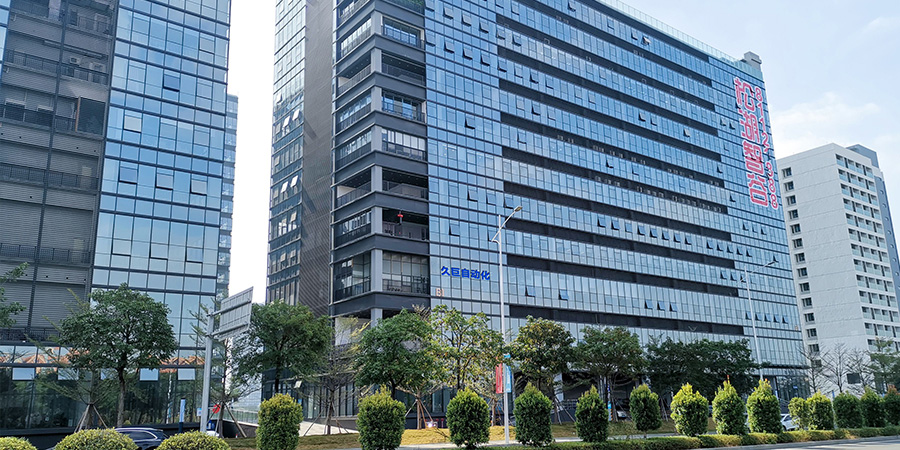
Jiuju Automation is an SRDI “Little Giant” Enterprise and has specialised in speaker automated assembly for 16 years, serving more than 2,500 customers. The company holds 256 technical patents and operates a 10,000 m² production base, offering one-stop solutions from standalone equipment to complete automated lines. Jiuju speaker automated assembly lines use high-precision vision positioning (±0.01 mm), AI-based inspection and fast changeover (<25 minutes), raising production efficiency by 300%+ and achieving a product yield of 99.8% with a 60% reduction in overall cost.
 Speaker automation jiujuauto





 简体中文
 English
 Tiếng Việt
 日本語
 한국어
 ไทย
 हिन्दी
 বাংলা
 Français
 Español de Perú
 Русский