Intermittent contact looks electrical, but most of the time the cause is mechanical. The joint between terminal and wire relies on plastic deformation; if the amount of deformation is wrong, continuity comes and goes.
First, is it intermittent contact or a broken strand?
Intermittent contact conducts but with high resistance, and fails after vibration or a temperature rise. A broken strand means some wires are cut: appearance normal, pull force low. The two look similar and are handled differently: intermittent contact means check crimp height; broken strands mean check crimp depth and the wire itself.
What happens when the terminal does not match the wire gauge?
Choose a terminal that is too large and voids remain after crimping, so contact resistance is high; too small and strands are crushed and cut, conducting at first and failing later. Different wire gauges on the same terminal need separate crimp heights; one set of parameters for every gauge will always leave one gauge out of spec.
Crimp height lower or higher?
Too low gives intermittent contact, too high gives broken strands; neither end works. Height has to be confirmed by a cross-section, not by appearance and pull force alone. A cross-section shows whether the strands are compacted and whether the terminal wall has cracks, and neither is visible from outside.
Insertion force or retention force, which do you test?
Both; they measure different things. Insertion force reflects the fit between terminal and mating part; retention force reflects the joint between terminal and wire. Test only insertion force and intermittent contact on the wire side goes undetected.
What can vision inspection see, and what can it not?
It can see whether the terminal is seated, deformed, or has exposed strands; it cannot see how dense the crimp is inside, nor the contact resistance. Vision prevents missing or wrong parts; it does not replace a cross-section or an electrical test. The combination that actually holds is three: cross-section on the first piece, retention force sampling in process, continuity before shipment. Each covers one segment, and dropping one leaves a blind spot.
How should reworked parts be handled?
Cut and re-crimp; do not crimp a second time on the same part. The deformation of a second crimp is uncontrolled: it may look right and still not hold. Re-crimping also breaks the batch record, so the lot has to be marked separately.
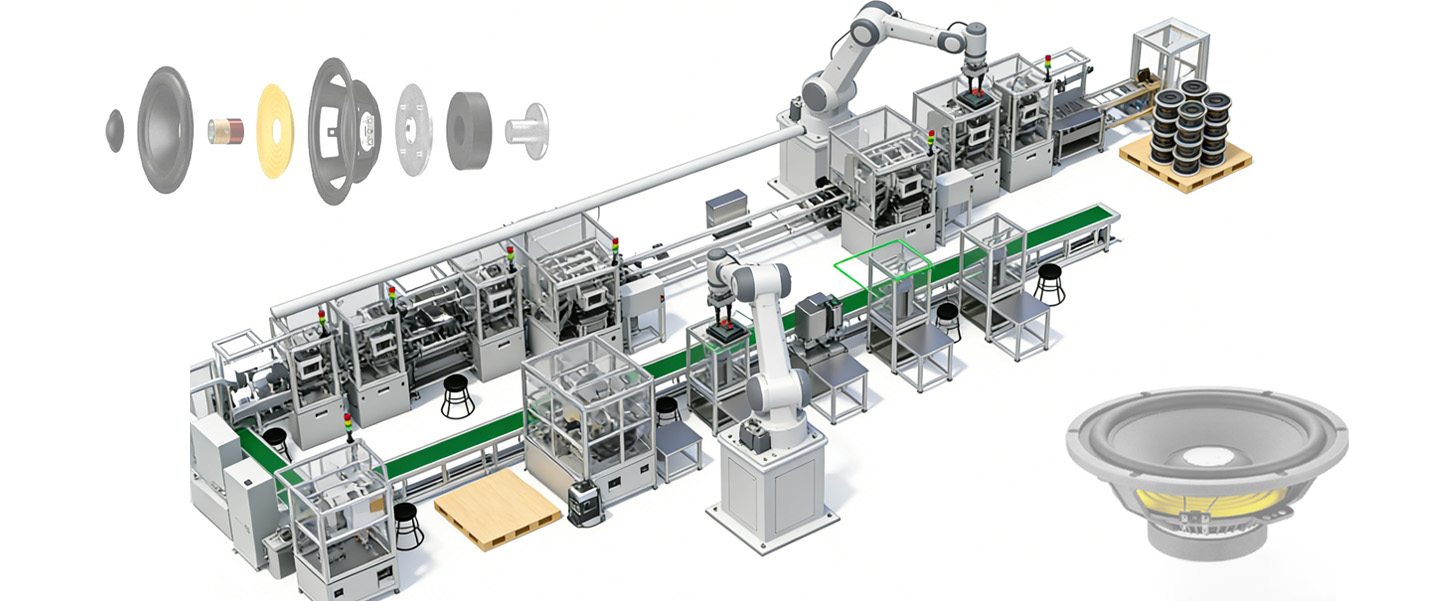
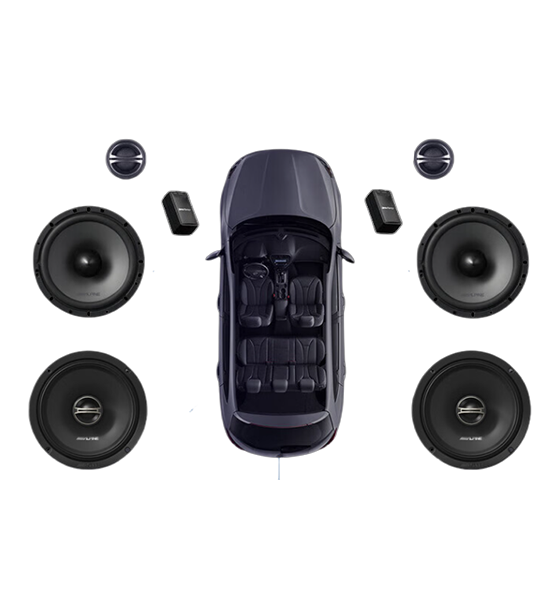
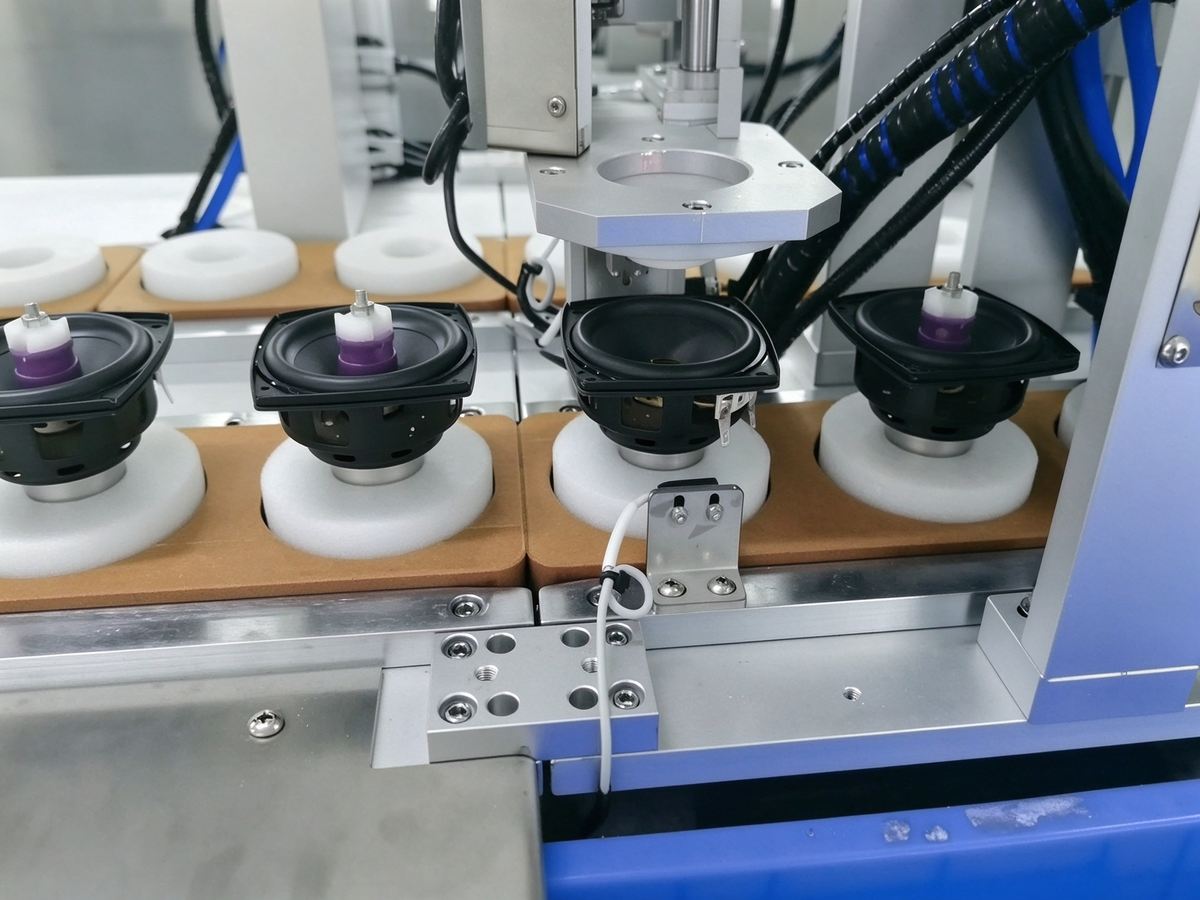
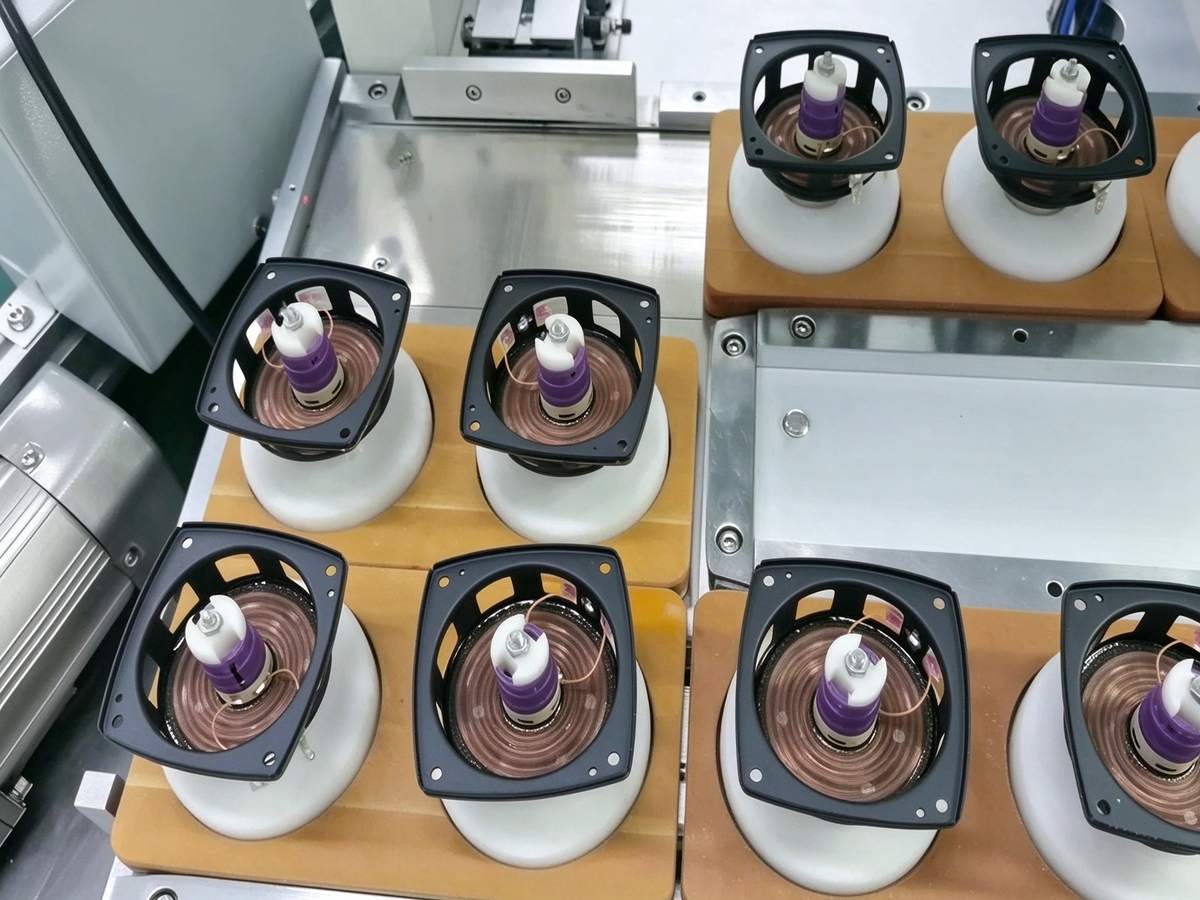
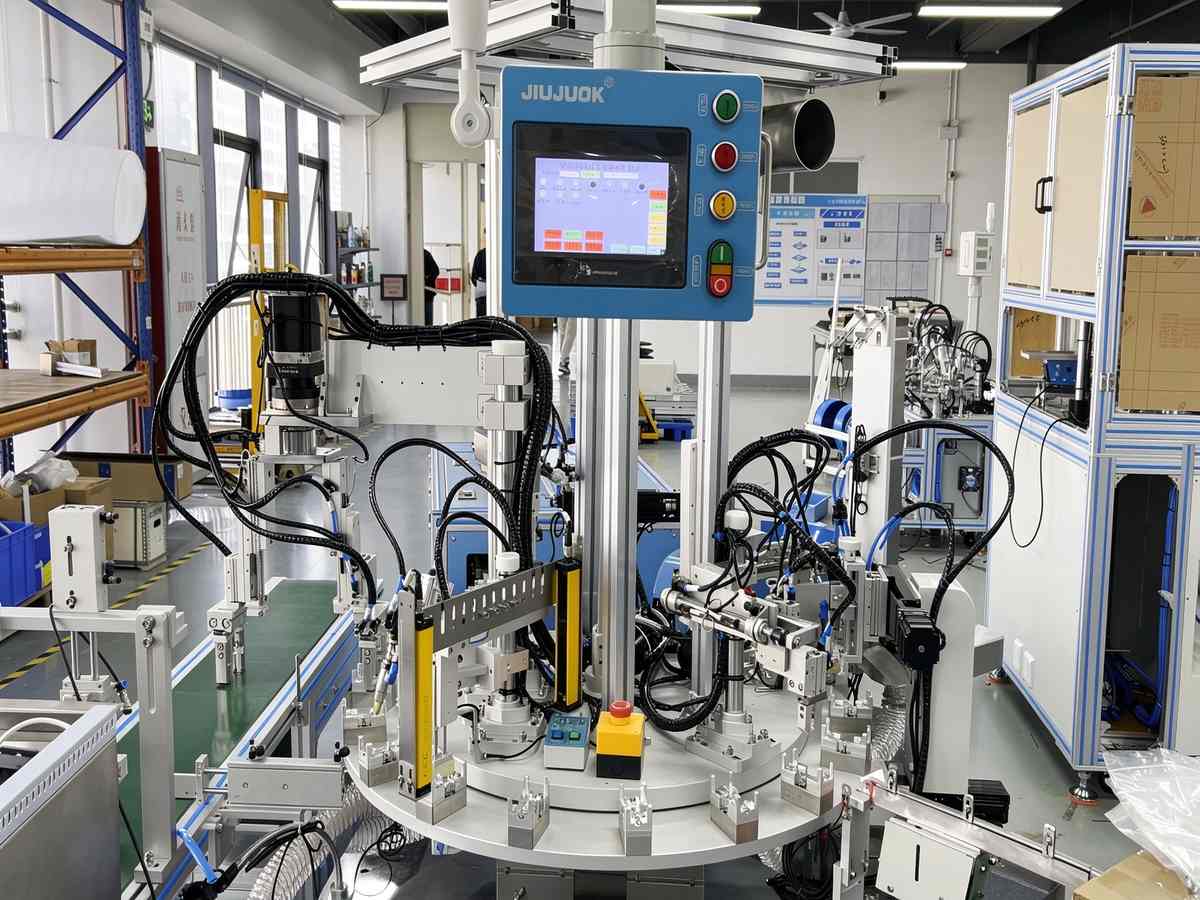
The split of work between processes has to be clear.Speaker Automation Terminal Insertion Machineparameters have to be managed in groups by wire gauge, not one set for all; plating and dimensional spread of incoming terminals need sampling, because uneven plating directly affects contact resistance; this process usually sits in the middle of anAutomotive Speaker Automation Production Line's middle section, and the conveying and cycle time of the stations before and after have to match, otherwise the cycle gets chased by raising speed and sacrificing crimp quality; for a small earphone-type part, on theHeadphone Speaker Automation Production Lineterminal station there is less space, so interference between pick-and-place and crimping has to be ruled out first.
 Speaker automation jiujuauto







 简体中文
 English
 Tiếng Việt
 日本語
 한국어
 ไทย
 हिन्दी
 বাংলা
 Français
 Español de Perú
 Русский