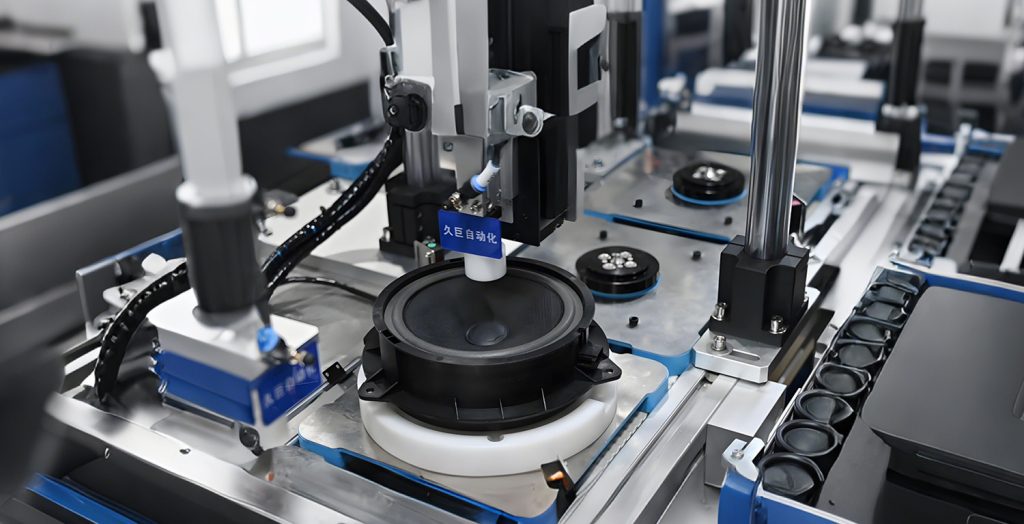
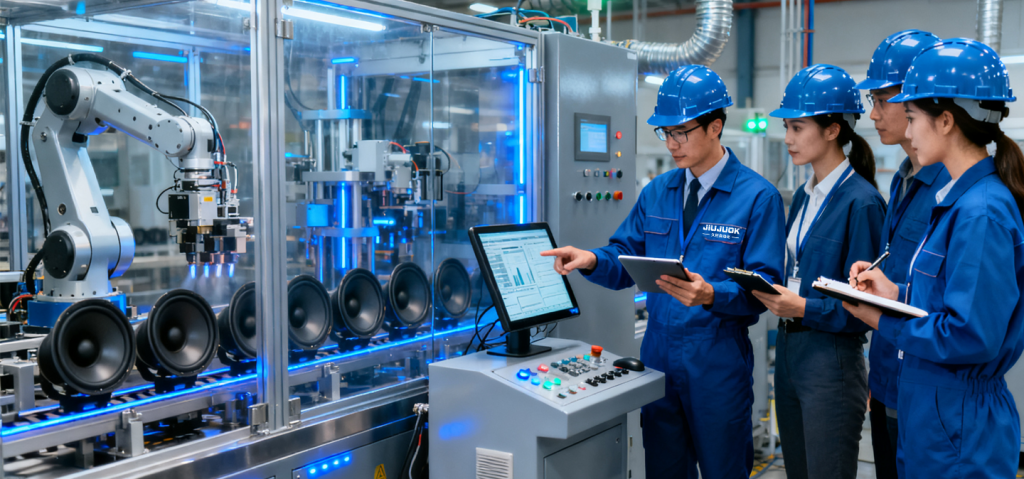
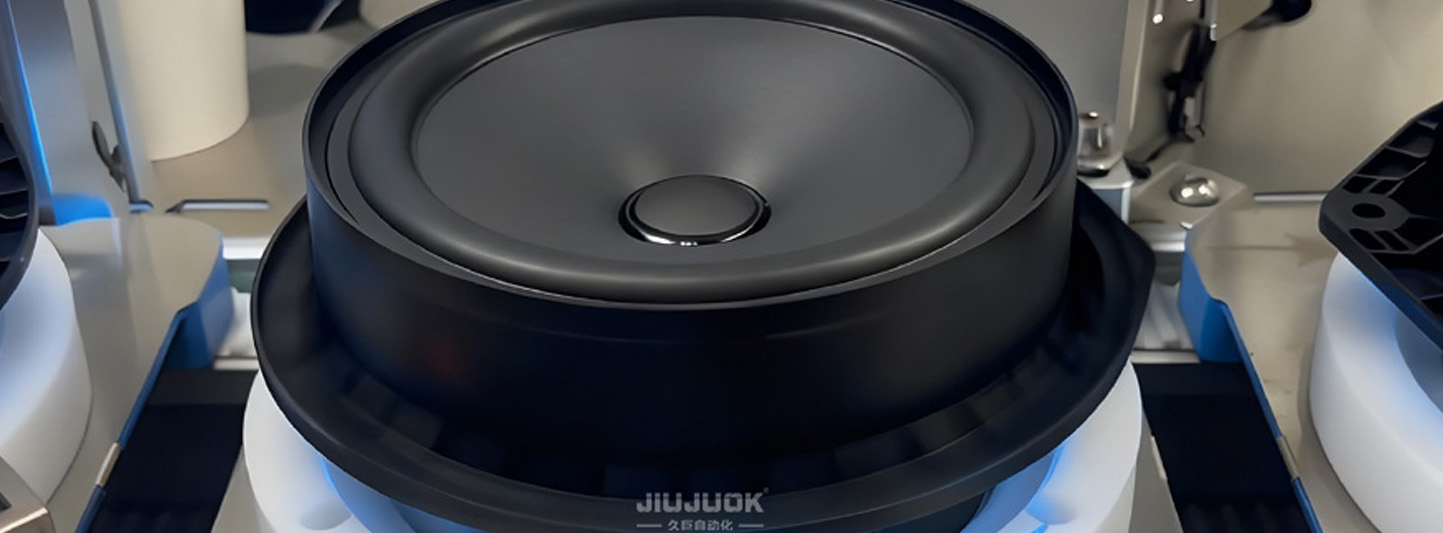
JiuJu Automation focuses on the intelligent upgrading of the whole process of speakers, integrating the four core technologies of visual inspection, precision assembly, AI quality inspection and data traceability to provide customized solutions for TWS headphones, car audio, multimedia smart audio speakers, etc., and achieve production capacity increase of 300%+, yield rate of 99.8%, and reduce the comprehensive cost of 60%, completely solving the pain points of the industry, such as manual dependence, stable quality control and delivery cycle. dependence, unstable quality control, long delivery cycle and other industry pain points. Based on the product characteristics and production scenarios of speakers, it creates a full-process automation system from the entry of raw materials to the release of finished products from the warehouse, covering the three major categories of micro, small and medium-sized, and adapting to the needs of multi-specification and multi-batch production.
Q: How does speaker automation equipment achieve green manufacturing? What energy-saving and eco-friendly technologies and methods are there?
A: Achieving green manufacturing in speaker automation equipment requires the use of multiple energy-saving and eco-friendly technologies and methods, mainly including the following aspects:
Energy-saving Design: 1. High-efficiency Motor: Use high-efficiency energy-saving motors to reduce equipment energy consumption. 2. Intelligent Control: Use an intelligent control system to optimize equipment operating parameters. 3. Energy Recovery: Use energy recovery technology to recover and reuse the energy generated during equipment operation. 4. Variable Frequency Speed Control: Use VFD technology to adjust equipment speed according to load requirements.
Eco-friendly Materials: 1. Eco-friendly Materials: Use eco-friendly materials to manufacture equipment, reducing environmental pollution. 2. Degradable Materials: Use degradable materials to package products and reduce white pollution. 3. Non-toxic Materials: Use non-toxic, harmless materials to protect operator health.
Clean Production Technology: 1. Cleanroom: Use cleanroom production to reduce dust pollution. 2. Wastewater Treatment: Establish a wastewater treatment system to achieve compliant wastewater discharge. 3. Exhaust Gas Treatment: Establish an exhaust gas treatment system to reduce exhaust emissions. 4. Noise Control: Use sound insulation technology to control equipment noise.
Recycling System: 1. Scrap Recycling: Establish a scrap recycling system to achieve resource recycling. 2. Equipment Recycling: Establish an equipment recycling and reuse system. 3. Packaging Recycling: Establish a packaging material recycling and reuse system.
By comprehensively applying these technologies and methods, speaker automation equipment can achieve green manufacturing, reduce energy consumption and environmental pollution, and realize sustainable development.
Core view:
Key point: Speaker automation equipment achieves green manufacturing through energy-saving design, eco-friendly materials, clean production and recycling technologies. Green manufacturing can reduce energy consumption and environmental pollution and is a development trend of manufacturing.
JiuJi Automation Advantage:
Frequently Asked Questions FAQ
Click a question to expand the answer
01How much power does a speaker production line draw?
This site does not publish a blanket kilowatt figure, because the power draw of a complete line varies widely with configuration — whether it includes acoustic testing, leak testing, AOI stations, dust extraction and exhaust can change the figure several-fold.The correct approach is to state the total power and a list of the main energy-consuming equipment against the configuration at the proposal stage.
02Where is the energy mainly consumed?
Four areas: the compressed-air system (including leaks), dust extraction and exhaust, heated stations (hot-melt adhesive, baking), and servo drives and transmission.Compressed air and exhaust are usually underestimated, because they do not act on the product directly yet run continuously. Measure these four first, then talk about saving energy.
03Do air leaks count as an energy problem?
They do, and they are the most easily overlooked item.A leak 1 mm in diameter consumes a considerable volume of air over long running hours, and the efficiency loss of the compressor compounds it. A quarterly pressure-hold test is advisable, with leaks repaired against a list; that is far cheaper than replacing equipment.
04Do dust extraction and exhaust consume much energy?
They take a noticeable share on this kind of line, because they usually run continuously.There are three directions for reducing consumption: run on demand (interlocked with the line, ramping down when it stops), match the air volume (avoid large sustained over-supply), and change filter media by differential pressure rather than on a fixed schedule.
05How is energy consumption actually reduced?
Rank by input against return: fix leaks first, then optimise the operating strategy for compressed air and exhaust, then insulate the heated stations, and only last consider swapping in high-efficiency motors.The first two are usually low-cost with a fast payback; motors are a large investment and the numbers must be worked out first.
06Should standby power be managed?
Yes.When the line is idle, servo drives, heaters and dust extraction often keep drawing power, and it adds up over long periods. A workable approach is staged standby: for a short stop, stop the motions only; for a long stop, switch off heating and dust extraction. The staging strategy must be agreed with the process, because restarting heaters requires reheat time.
07Can energy saving affect cycle time?
It can, if the saving comes from lowering air pressure, air volume or heating temperature.So a boundary test is needed: lower the pressure or temperature step by step, watch how cycle time and the defect rate move, and find the boundary value that does not affect quality. Lower parameters by feel and quality will fail first.
08How should energy consumption be metered?
Three levels are recommended: a master meter at workshop level, sub-meters at line level, and separate metering for key equipment (compressor, dust extraction, heating).A master meter alone will not show where the waste is. Sub-meters are a modest investment but let you tie each saving action directly to its effect.
09How should compressors be sized for lower cost?
Size against the actual air-demand curve, not against the peak.In most workshops demand is below peak for most of the time, and a single large machine running at low load for long periods is very inefficient. A workable arrangement is a large and a small machine, or a variable-frequency machine, with the small unit carrying base load and the large one topping up the peak.
10Are there low-energy equipment options?
Three directions: replace pneumatics with servo drives (less air used), insulate and zone-control heated stations (less heat loss), and put dust extraction on variable frequency with interlocks (less idle running).All three are structural design decisions that must be raised at the proposal stage; retrofitting them later is expensive.
11Should energy data be recorded?
Yes, and it should be tied to output.Electricity consumption on its own means little; only energy per unit produced shows whether the change came from output or from efficiency. Recording can be as simple as a daily meter reading — what matters is that it is sustained.
12Which environmental compliance points need attention?
Four categories: waste gas (volatiles from hot-melt adhesive and cleaning agents), dust (extraction discharge), noise (compressors, stamping), and solid waste (adhesive residue, scrap).Specific requirements follow the local environmental authority and the customer’s audit standard, and they vary widely by region. Include dust extraction and exhaust when selecting equipment, so they do not have to be retrofitted later.
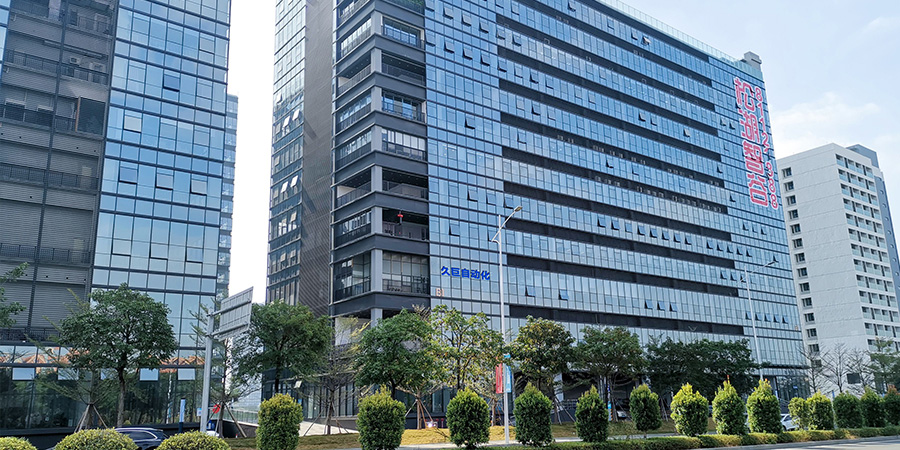
Jiuju Automation is an SRDI “Little Giant” Enterprise and has specialised in speaker automated assembly for 16 years, serving more than 2,500 customers. The company holds 256 technical patents and operates a 10,000 m² production base, offering one-stop solutions from standalone equipment to complete automated lines. Jiuju speaker automated assembly lines use high-precision vision positioning (±0.01 mm), AI-based inspection and fast changeover (<25 minutes), raising production efficiency by 300%+ and achieving a product yield of 99.8% with a 60% reduction in overall cost.
 Speaker automation jiujuauto












 简体中文
 English
 Tiếng Việt
 日本語
 한국어
 ไทย
 हिन्दी
 বাংলা
 Français
 Español de Perú
 Русский