Acceptance is not ticking boxes; it is reproducing. If the line ran well while the supplier was there and will not run for you afterwards, the conditions were not recorded at acceptance. Order matters more than the list: static first, then dynamic, then the numbers.
Start with static checks: what do you look at?
Datum, clearance, guarding. Whether datum faces show machining marks, whether locating parts can be swapped, whether clearances between moving and fixed parts are consistent. Guarding covers light curtains, emergency stops and door interlocks: they take no part in production, but they are the last line when something goes wrong.
Then dynamic: dry run, run with product, continuous run, what is the difference?
A dry run shows whether motions are smooth, with no interference or abnormal noise; a run with product shows whether locating, gripping and pressing are stable; a continuous run shows temperature rise, wear and cycle time drift. All three must be run; a dry run alone is not an acceptance.
How should the numbers be recorded to count?
Cycle time as the average of the whole batch, not the fastest single piece; yield as output over input, not good units divided by inspected units; downtime recorded by category, because if you cannot separate a fault from a material change or waiting for an operator, there is nothing to improve. Fix the definition of these three and later comparisons become possible.
Which documents should be handed over?
Drawings, parameter lists, spare parts lists, maintenance intervals. The parameter list is the one most often skipped: if the values in the PLC are not handed over, the next person cannot bring them back. The spare parts list should show lead times for critical items; for wear parts without spares, a stoppage means waiting for delivery.
What if acceptance fails?
Two categories: what can be corrected gets a corrective item, a deadline and a re-test; what cannot gets a concession acceptance with the scope of impact stated. Both must be on paper; a verbal agreement is the easiest thing to turn into a dispute after mass production starts. One step is often skipped: keep corrective and concession items in separate lists, close a corrective item only after re-test, and have the concession signed.
Which item is most often missed?
The method for judging the first piece. Most acceptances only check that the first piece passed, not what the judgement was based on. What the standard is, who judges, and where it is recorded: leave those three open and the same dispute returns after mass production. One dispute usually means stopping the line to renegotiate, which costs far more than half a day at acceptance.
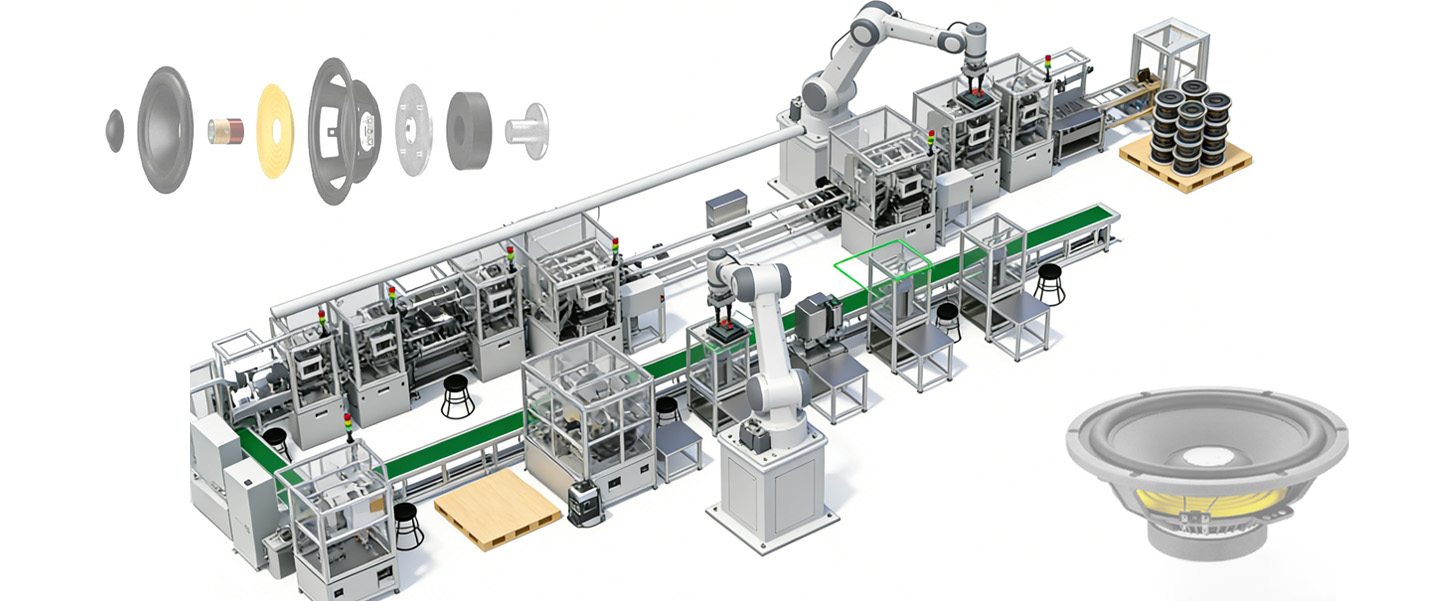
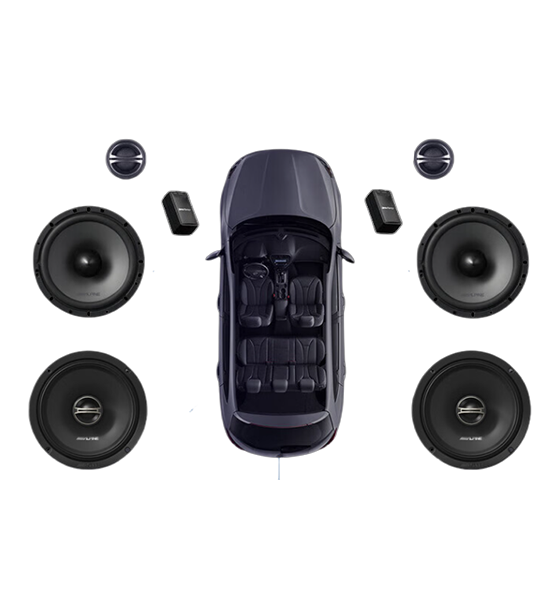
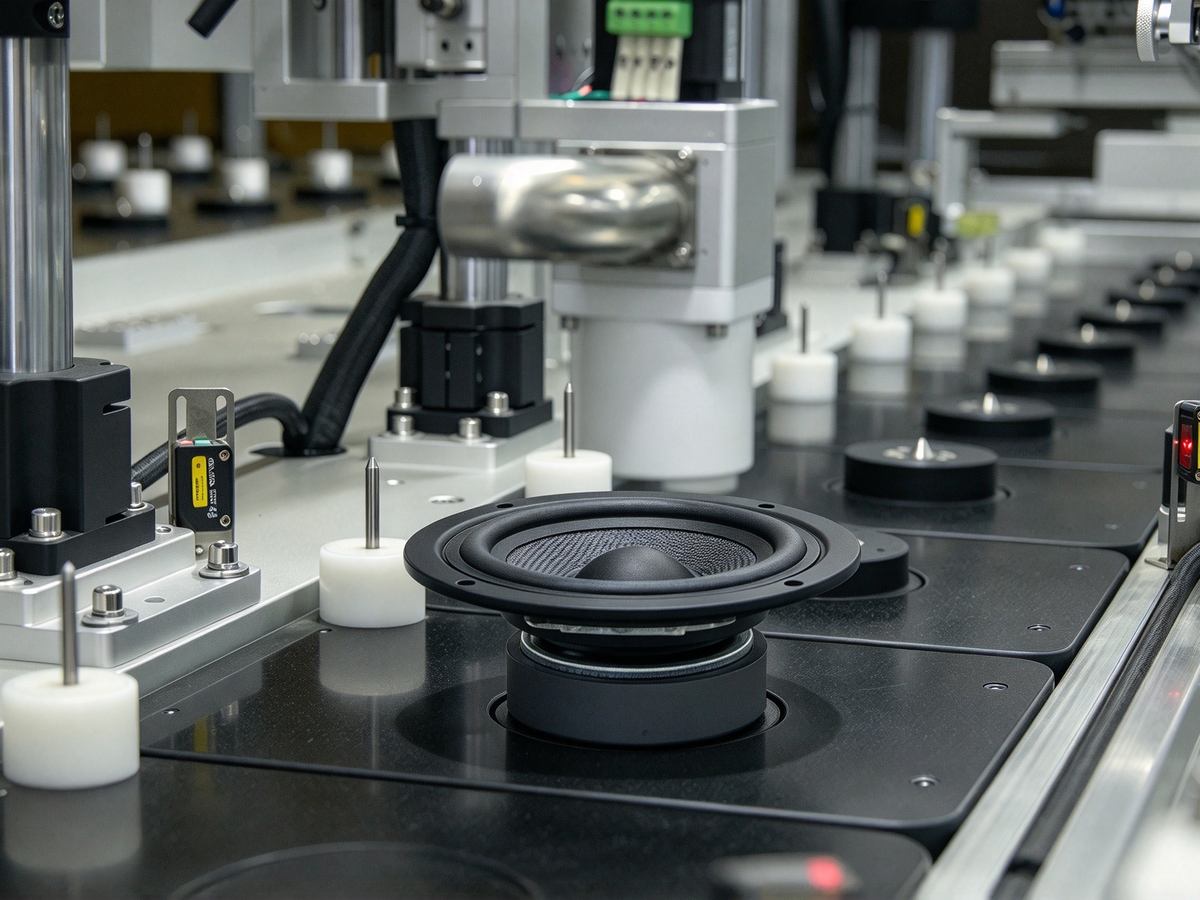
Acceptance has to be done on the whole line, not machine by machine.Automotive Speaker Automation Production LineLines of this kind have the most interfaces: conveying height between stations, carrier handover and cycle time matching all have to be looked at together; the model-changeover capability of anAudio Speaker Automation Production Lineshould be demonstrated by the supplier during acceptance; the stability of the magnetic circuit section depends on theSpeaker Internal-magnet Automatic Magnetic Circuit Machine's locating and pressing, and acceptance has to run enough pieces from one incoming lot to show that stability.
 Speaker automation jiujuauto









 简体中文
 English
 Tiếng Việt
 日本語
 한국어
 ไทย
 हिन्दी
 বাংলা
 Français
 Español de Perú
 Русский