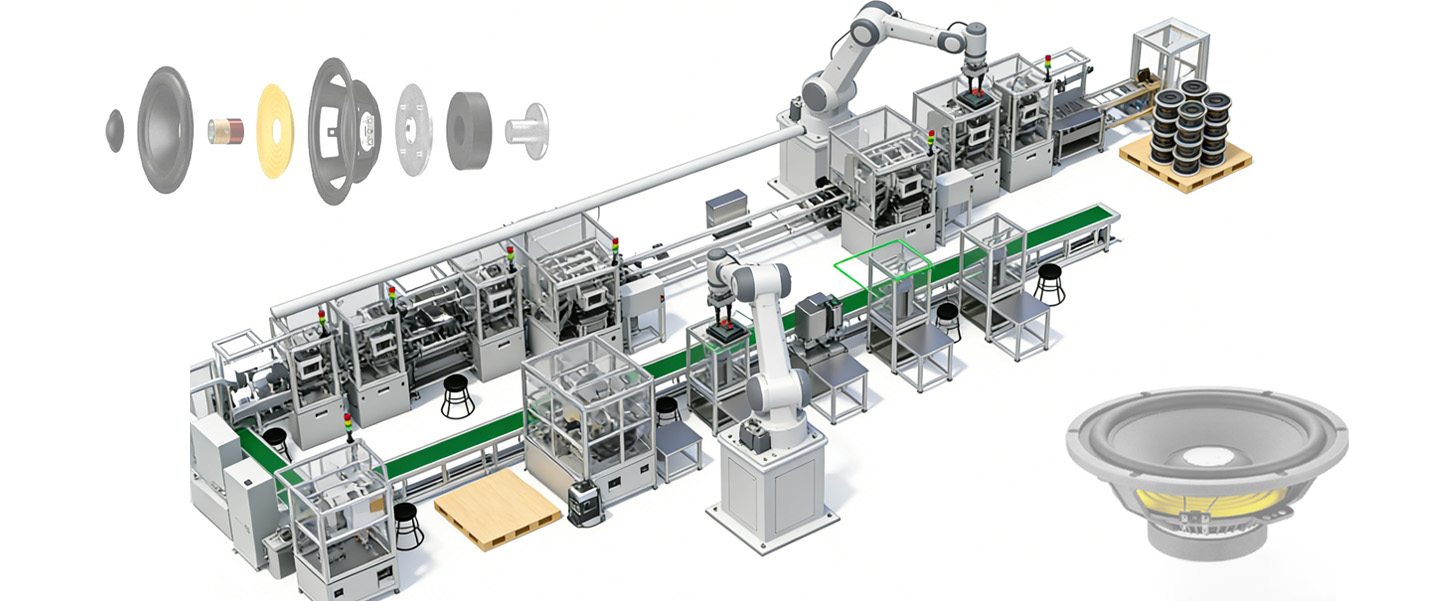
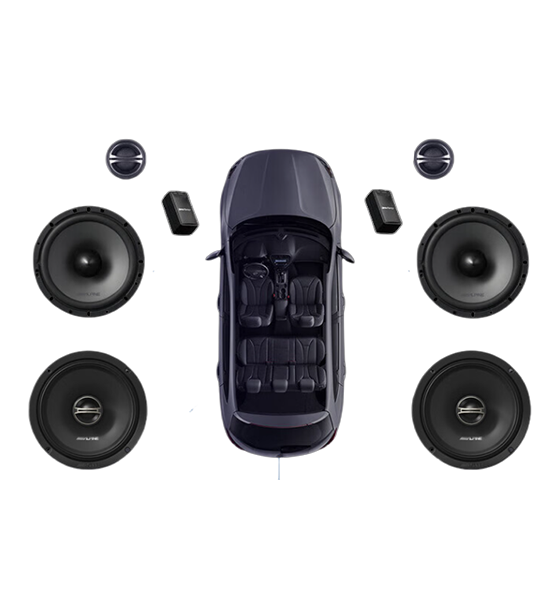
JiuJu Automation focuses on the intelligent upgrading of the whole process of speakers, integrating the four core technologies of visual inspection, precision assembly, AI quality inspection and data traceability to provide customized solutions for TWS headphones, car audio, multimedia smart audio speakers, etc., and achieve production capacity increase of 300%+, yield rate of 99.8%, and reduce the comprehensive cost of 60%, completely solving the pain points of the industry, such as manual dependence, stable quality control and delivery cycle. dependence, unstable quality control, long delivery cycle and other industry pain points. Based on the product characteristics and production scenarios of speakers, it creates a full-process automation system from the entry of raw materials to the release of finished products from the warehouse, covering the three major categories of micro, small and medium-sized, and adapting to the needs of multi-specification and multi-batch production.
Q: What factors do I need to consider when choosing a brand of speaker automation equipment? What are the characteristics of each domestic and foreign brand?
A: SelectSpeaker automation equipmentA number of factors need to be taken into account when choosing a brand, including technical strength, product quality, after-sales service and price-performance ratio. The following are the key points for choosing a brand: technical strengthis the primary consideration in choosing a brand. Quality brands usually have strong R&D teams and technology accumulation, and are able to provide advanced automation technologies and solutions. product qualityIt directly affects the stability and service life of the equipment. You should choose the brand name products with high quality components and strict quality control. after-sales serviceIt is especially important for professional equipment. Good after-sales service including installation and commissioning, operation training, maintenance, spare parts supply, etc., can ensure the normal operation of the equipment. price-quality ratioratio is also an important consideration. Reasonably priced products should be selected on the premise of meeting technical requirements.
In terms of brand types, domestic and foreign brands have their own characteristics: Foreign brands usually have advanced technology and stable product quality, but the price is higher, the delivery cycle is longer, and the after-sales service response may not be timely. Domestic brands have been developing rapidly in recent years, with improving technology, high cost performance and fast after-sales service response, which can better meet the needs of domestic customers. When choosing, it is recommended to prioritize brands with rich industry experience, good market reputation and perfect after-sales service system. You can refer to the use experience of other users and conduct field inspections to understand the actual operation of the equipment. It is also important to consider the brand's ability to sustain development and technological innovation to ensure that the equipment can adapt to future technological developments and production needs.
Core view:
Core point: choose the speaker automation equipment brand should be comprehensive consideration of technical strength, product quality, after-sales service and price performance ratio. Domestic and foreign brands have their own advantages, the key is to choose the brand and product that best suits their needs.
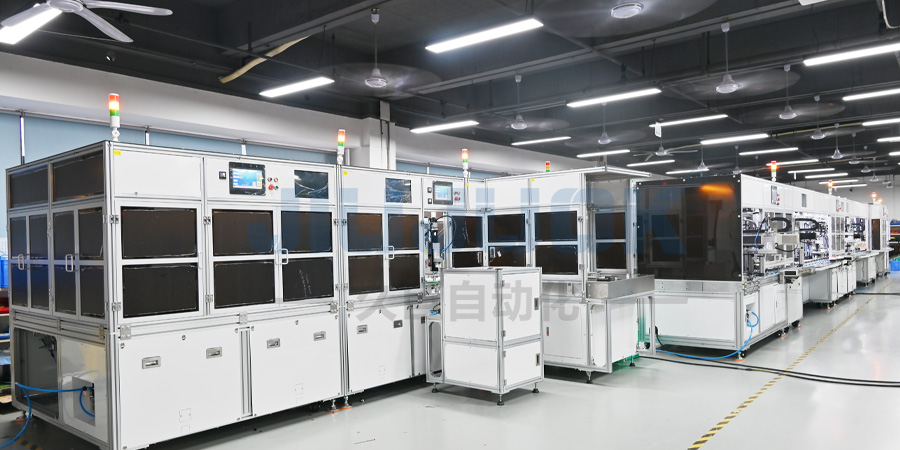
Jiuju Automation is an SRDI “Little Giant” Enterprise and has specialised in speaker automated assembly for 16 years, serving more than 2,500 customers. The company holds 256 technical patents and operates a 10,000 m² production base, offering one-stop solutions from standalone equipment to complete automated lines. Jiuju speaker automated assembly lines use high-precision vision positioning (±0.01 mm), AI-based inspection and fast changeover (<25 minutes), raising production efficiency by 300%+ and achieving a product yield of 99.8% with a 60% reduction in overall cost.
Frequently Asked Questions FAQ
Click a question to expand the answer
01Which hard indicators should be checked when choosing a supplier?
Five: whether they can run a process assessment on your product, whether they offer trial runs with your samples, whether key indicators can be written into the contract, how spares and after-sales are defined, and whether the control platform is open and extensible.All five can be verified, which is more useful than looking at brand recognition.
02Why is there no brand comparison here?
Two reasons: a brand comparison needs verifiable side-by-side test data, which this site does not have; and assessing competitors on our own website is neither professional nor objective.A more useful approach is to set out the selection criteria so you can compare against them; that is more reliable than judging whose brochure looks better.
03What should be examined in a technical proposal?
Three points: whether the process breakdown is clear (who performs each step, at what cycle time), whether the bottleneck station is identified, and whether incoming-material requirements are stated.A proposal with only an equipment list and no process breakdown usually means no process assessment was done — it is a templated quotation.
04How can delivery capability be verified?
Three things: look at how many machines and stations are in build in the workshop, ask about lead times for key components, and require a staged delivery plan (design, manufacture, in-house commissioning, shipment, on-site commissioning).A single overall duration with no stages carries a high risk of delay.
05How should after-sales response be defined?
Write down three things: response time (how soon they reply), attendance time (how soon they reach the site), and a spare-parts commitment (how soon common spares can be supplied).A verbal promise of support at any time has no binding force. These three items directly affect how long a breakdown stops the line, and they matter more in practice than the warranty period.
06How can spare-parts supply be secured?
Ask for a wear-parts list giving model, supplier, recommended stock level and replacement interval.For key items (servos, vision, dedicated tooling), confirm long-term availability. Not being able to find a spare after three to five years of use is the most common hidden cost.
07How important is a trial run?
Very important. It is the only step that verifies whether the job can be done before payment.This equipment supports trial runs with customer samples: free for standard models with regular workpieces, taking 3–10 working days; non-standard tooling is charged by convention and credited against the order. A trial produces a test record, which is more reliable than a parameter sheet.
08What do case studies prove, and what do they not?
They prove the supplier has done similar processes and has engineering experience; they do not prove your product will work, because differences in size, magnetic circuit and incoming form change tooling and parameters.The right way to read a case is to ask for detail: what was the biggest problem on that line and how was it solved.
09Quotations differ widely — how should that be judged?
Look at the configuration differences first, then discuss price.The difference usually comes from four places: the number of inspection stations, the number of tooling sets, the control-system brand, and whether a data layer is included. Align the lists on those four points first; comparing prices is only meaningful afterwards. Comparing totals alone usually compares what has been left out.
10Which technical clauses belong in the contract?
Four acceptance metrics (cycle-time attainment, yield, OEE, changeover time), the production validation method (72 consecutive hours), incoming inspection standards and the division of responsibility, and training and after-sales clauses.With those four written down, acceptance has a basis; writing only that the equipment meets the national standard amounts to writing nothing.
11How can you tell whether a supplier understands the process?
Ask three specific questions: what is hardest to guarantee in my process, how will incoming-material variation affect your proposal, and which parameters must be reset at changeover?Someone who knows the process gives specific answers and states the limits; someone who does not falls back on product parameters and sales language.
12What are the risks of switching suppliers mid-project?
Three: incompatible interfaces and tooling (existing tooling cannot be used), a break in the data layer (the traceability chain is cut), and unclear boundaries of responsibility (each side blames the other when a problem arises).Before switching, obtain three things: the interface standard, the tooling list and the data fields; otherwise the change will create more trouble than it solves.
 Speaker automation jiujuauto











 简体中文
 English
 Tiếng Việt
 日本語
 한국어
 ไทย
 हिन्दी
 বাংলা
 Français
 Español de Perú
 Русский