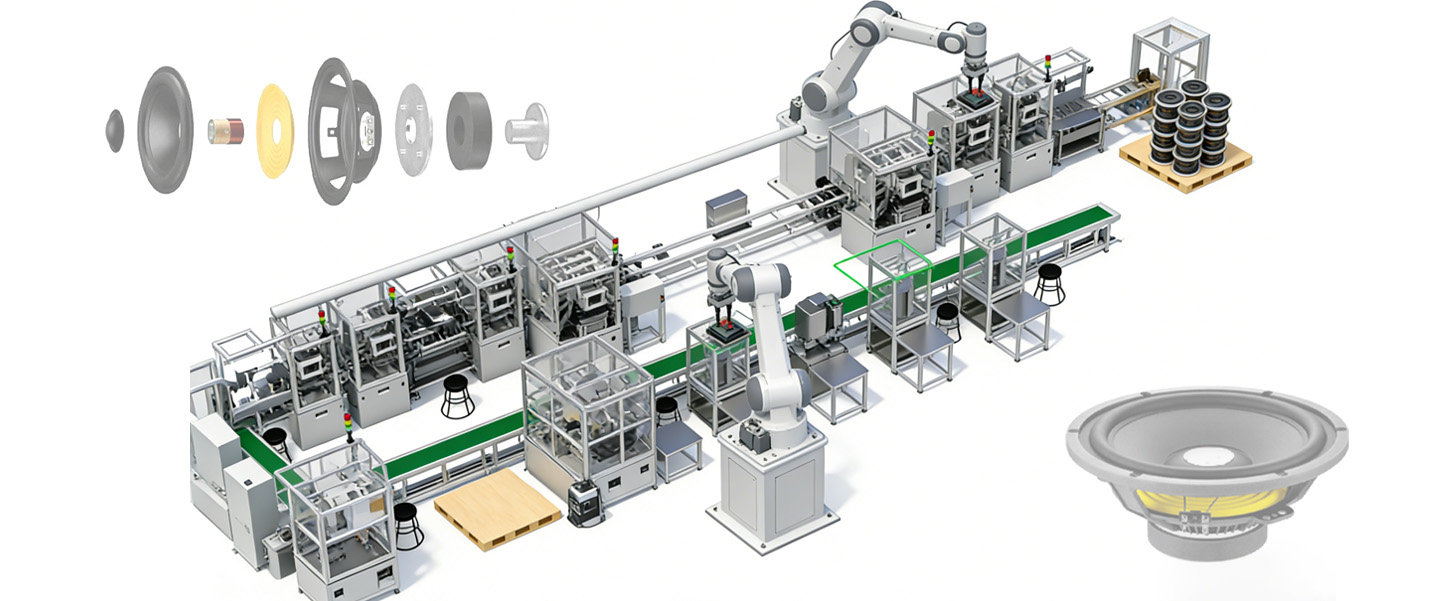
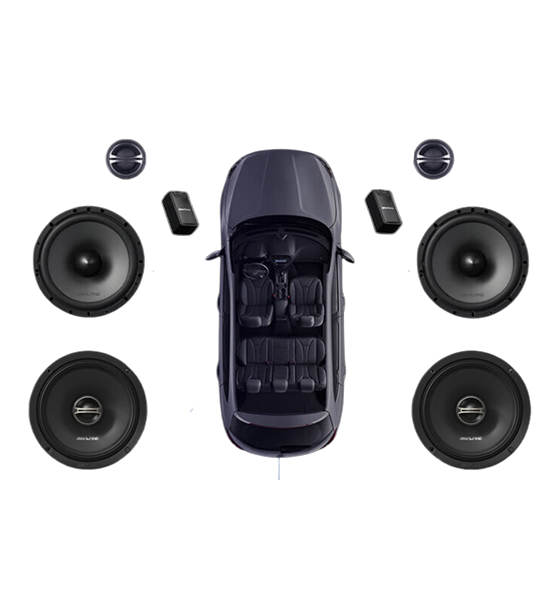
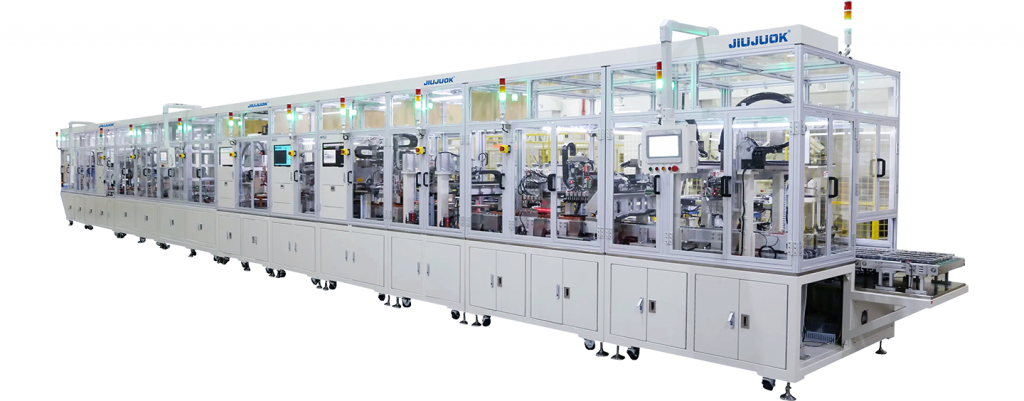
JiuJu Automation focuses on the intelligent upgrading of the whole process of speakers, integrating the four core technologies of visual inspection, precision assembly, AI quality inspection and data traceability to provide customized solutions for TWS headphones, car audio, multimedia smart audio speakers, etc., and achieve production capacity increase of 300%+, yield rate of 99.8%, and reduce the comprehensive cost of 60%, completely solving the pain points of the industry, such as manual dependence, stable quality control and delivery cycle. dependence, unstable quality control, long delivery cycle and other industry pain points. Based on the product characteristics and production scenarios of speakers, it creates a full-process automation system from the entry of raw materials to the release of finished products from the warehouse, covering the three major categories of micro, small and medium-sized, and adapting to the needs of multi-specification and multi-batch production.
The wave of thin and light smart wearable devices is pushing speaker sizes to the limit, and Same Sky's ultra-miniature speaker measures just 15.1mm x 11.35mm x 3.5mm, with a diaphragm thickness of 0.76mm and weighing in at less than 0.2g. This trend towards miniaturization puts the traditional production model in a difficult position - manual assembly is prone to distortion caused by fingertip pressure during assembly, and a deviation of 0.1mm in assembly can result in a 5dB drop in sound pressure level. Fingertip pressure during assembly is likely to cause deformation of the diaphragm, and an assembly deviation of 0.1mm may result in a 5dB drop in sound pressure level.
The production pain points of miniature speakers have significant industry commonality. The first is the problem of picking and placing precision parts, voice coil skeleton and other parts sizes below 5mm, manual sorting efficiency is less than 300 pieces / hour, and the breakage rate of more than 8%.The second is the precise control of the bonding process, the folded ring and the diaphragm need to be coated with 0.01ml level of adhesive, manual dispensing is prone to overflowing or leakage of adhesive, which directly affects the waterproof performance and service life. Lastly, consistency control, smart wearable devices require less than ±2dB deviation from the frequency response curve of the speaker, and it is difficult to realize batch accurate determination by manual testing.
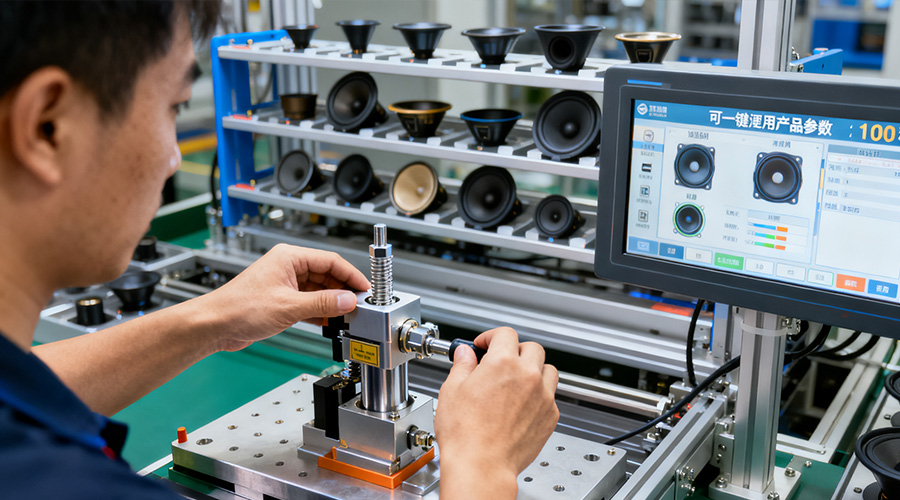
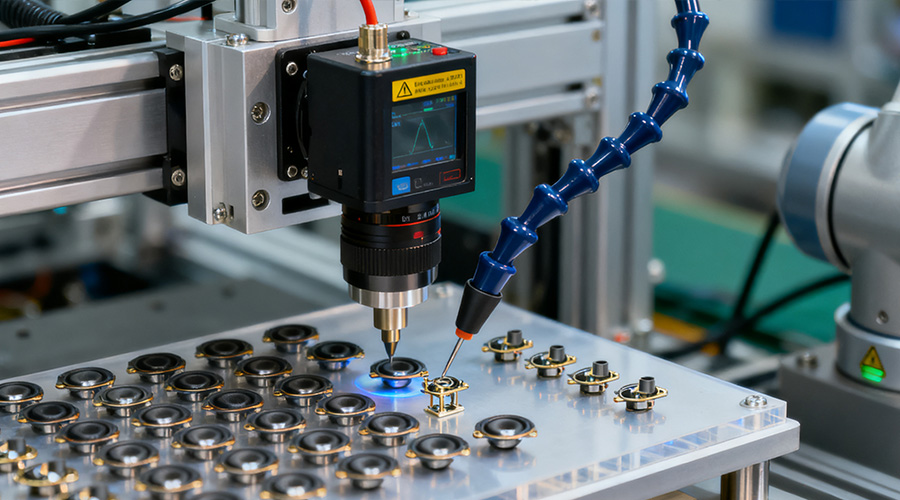
The automation solution realizes full process adaptation through modular design. In the feeding process, a vision-guided vacuum nozzle system is used to locate the parts through a 3-megapixel industrial camera, with a pick-and-place accuracy of ±0.01mm and a breakage rate of 0.3% or less. The dispensing process is equipped with servo-driven piezoelectric dispensing valves, with the error of glue output controlled within 0.001ml, together with the online weighing inspection, eliminating bonding defects. The automatic lifting and reflowing technology of the fixtures in the final assembly stage can realize the seamless connection of 12 processes from magnetic circuit assembly to dust cap fitting, and the production beat is increased to 800 pieces/hour.
JiuJi automation for TWS headset speaker automation production line transformation project shows that after the automated production line is put into use, the product qualification rate from 89% jumped to 99.2%, the average daily production capacity of a single production line increased by 4 times, and successfully adapted to the head of the flagship models of the brand's orders. This shows that automation technology has become the core power of micro electro-acoustic devices to break through the bottleneck of mass production.
 Horn automation jiujuauto



 简体中文
简体中文 English
 Tiếng Việt
 日本語
日本語 한국어
한국어 ไทย
ไทย हिन्दी
 বাংলা
বাংলা Français
 Español de Perú
 Русский