Mid-2026 Observation: Electroacoustic Enterprises Advance on Two Fronts (Overseas Factories and Cross-industry AI), Speaker Automation Becomes a Necessity for Capacity Expansion
Overseas Factory: From "Domestic Production" to "Dual-location Manufacturing"
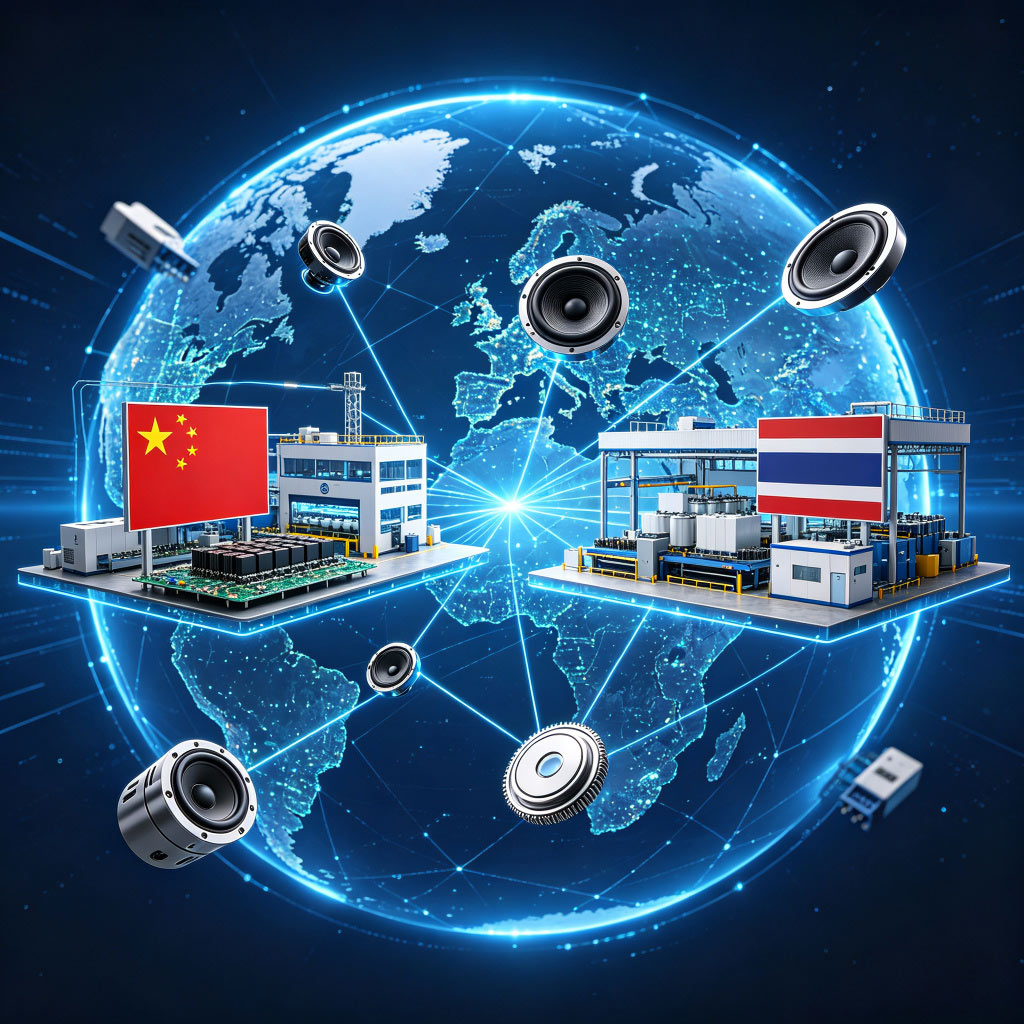
On 16 July 2026, Haosheng Electronics confirmed that its Thai electroacoustic plant, an investment of 25 million baht, had entered initial production, mainly developing and manufacturing micro speaker units, receivers and audio products. This is not a simple relocation of capacity: in 2025 its audio electroacoustic output was 1.18 million units with capacity utilisation of only 49.17%, and the new Thai base effectively adds a second manufacturing location and trade route for export business, hedging order volatility from geopolitical conflict and international trade friction.
When overseas customers are increasingly sensitive to trade routes and delivery locations, electroacoustic enterprises no longer need "a few more assembly machines" but a stable manufacturing capability replicable across factory sites: automation and consistency of magnetic circuit assembly, voice coil winding, body assembly and curve testing. This is exactlySpeaker Automatic Assembly Solutionscore value.
Cross-industry Upgrade: From "Making Speakers" to "Making AI Foundations"
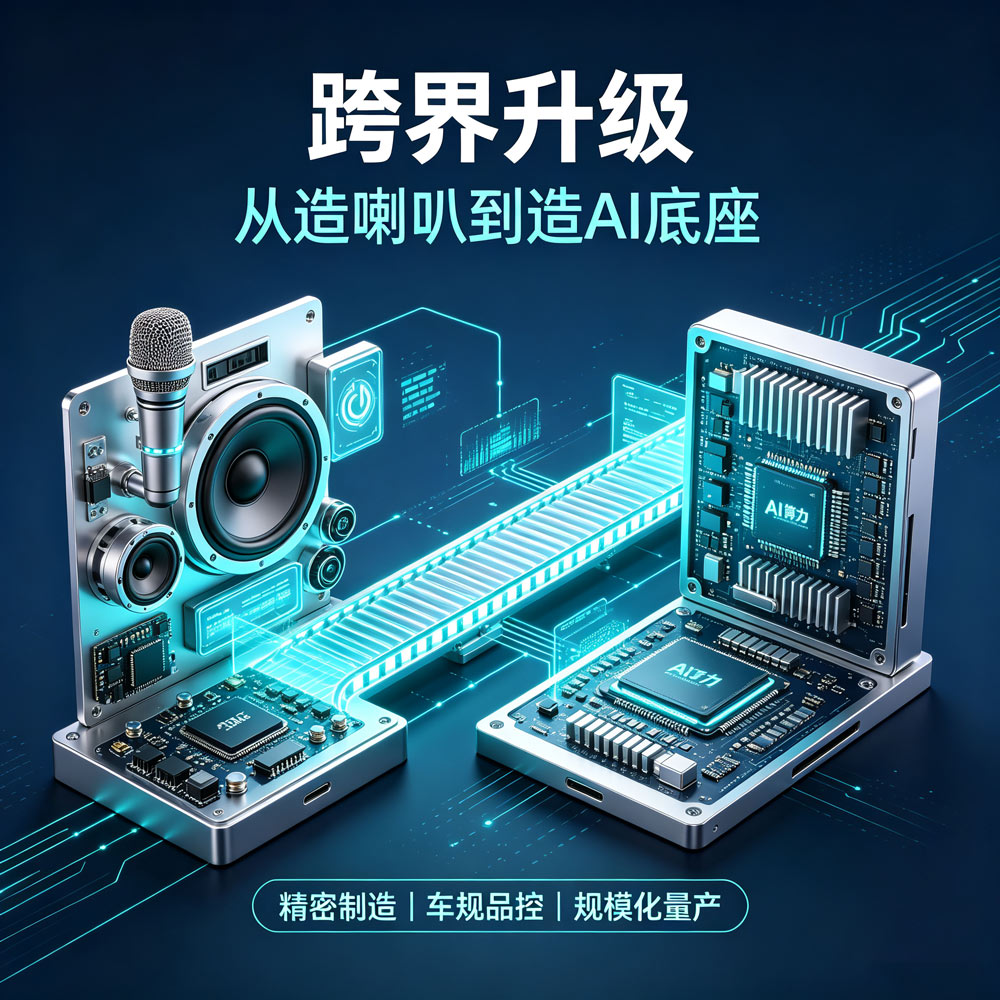
On 11 July 2026, Gettop Acoustic announced a strategic cooperation framework agreement with Kunshan Maji Electronics, entering the upstream power-supply component segment of AI computing. Its confidence rests on more than twenty years of precision manufacturing in microphones and speakers — SMT automatic placement, automotive-grade quality control and volume production capability — which can be applied directly to AI hardware. Gettop had already built an electroacoustic component base in Yiwu, planned for annual output of 20 million automotive electroacoustic components and 14 million consumer-electronics electroacoustic assemblies.
Whether firmly holding the automotive electroacoustic base or extending into AI power, the manufacturing foundation is the same: a high-precision, high-consistency, scalable assembly system. The greater the capacity and the more categories, the deeper the reliance on automation production lines.
Technology Iteration: MEMS Speaker Units Open New Space for Wearables
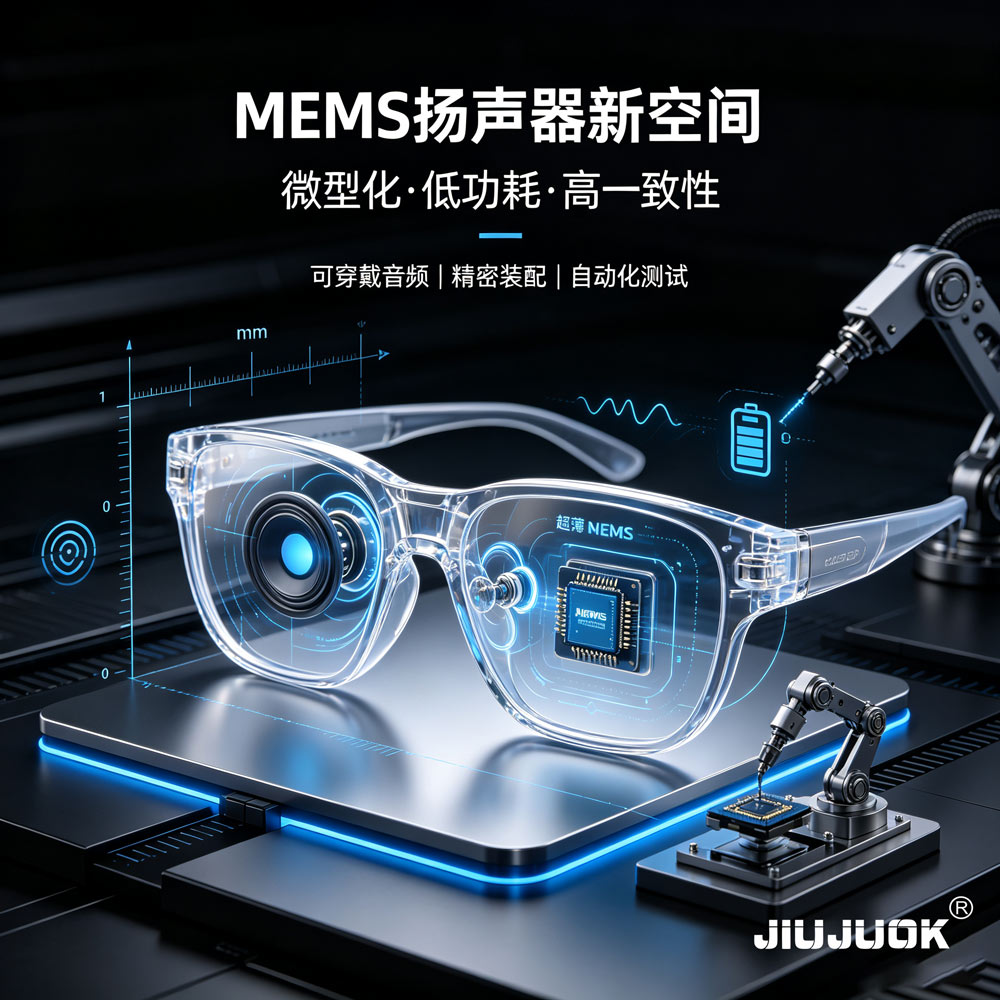
In July 2026, USound released the Danube 7.1 audio-glasses reference design based on ultra-thin MEMS loudspeaker units, using a dipole acoustic structure to reduce sound leakage and compressing the loudspeaker-unit thickness to the millimeter level. Miniaturization, low power consumption, high consistency — such new-form-factor electroacoustic devices impose more demanding requirements on assembly processes and further amplify the necessity of automated assembly.
Jiuju View: Capacity Expansion and Going Global are Both Automation Opportunities
Building plants abroad means moving proven domestic lines overseas; cross-sector upgrading means carrying a new business on the same manufacturing base; and technical iteration means pushing precision to the millimetre level. All three lead the same way: the dependable growth in electroacoustic manufacturing comes from stable capacity and consistent quality — exactly the direction Jiuju's automated speaker assembly solutions have pursued for years. For electroacoustic companies planning to expand or build overseas, planning the automated line in advance is the key step that turns orders into profit.
**Related Recommendations:**
—
*Still worried about hiring difficulties and unstable quality? Jiuju has focused on speaker automation for 16 years and is the choice of more than 2,000 customers. Call now: 400-626-8699 or 134-2897-6919 Book a free solution consultation, or[Schedule a factory tour in Shenzhen/Dongguan], and witness the real efficiency of an automated production line with your own eyes!*
 Speaker automation jiujuauto











 简体中文
 English
 Tiếng Việt
 日本語
 한국어
 ไทย
 हिन्दी
 বাংলা
 Français
 Español de Perú
 Русский