JiuJu Automation focuses on the intelligent upgrading of the whole process of speakers, integrating the four core technologies of visual inspection, precision assembly, AI quality inspection and data traceability to provide customized solutions for TWS headphones, car audio, multimedia smart audio speakers, etc., and achieve production capacity increase of 300%+, yield rate of 99.8%, and reduce the comprehensive cost of 60%, completely solving the pain points of the industry, such as manual dependence, stable quality control and delivery cycle. dependence, unstable quality control, long delivery cycle and other industry pain points. Based on the product characteristics and production scenarios of speakers, it creates a full-process automation system from the entry of raw materials to the release of finished products from the warehouse, covering the three major categories of micro, small and medium-sized, and adapting to the needs of multi-specification and multi-batch production.
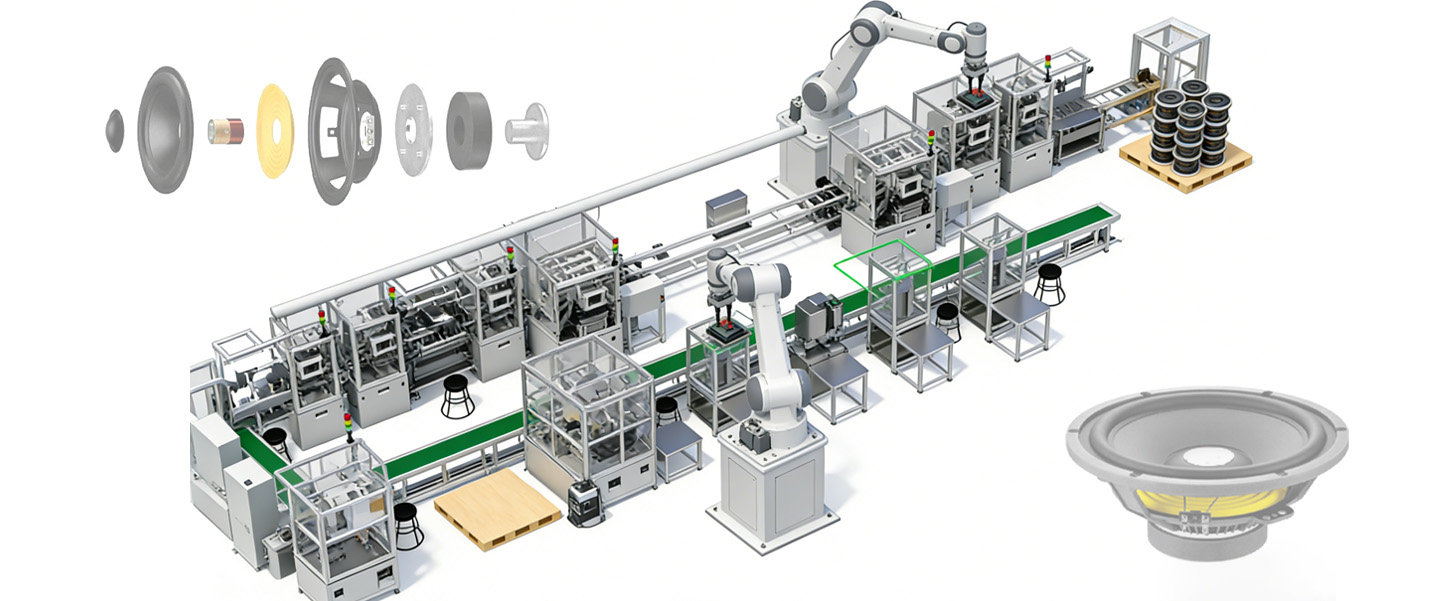
A TV speaker seems to have only a few core components such as “cone frame, magnetic circuit, diaphragm, voice coil”, but its assembly process contains 12 precision procedures, and any deviation in any one of them will affect the final sound quality. And in theJumbo Autoformalized intv speaker automation line assembly lineWe can clearly see the efficient and standardized journey of “from parts to finished product”.
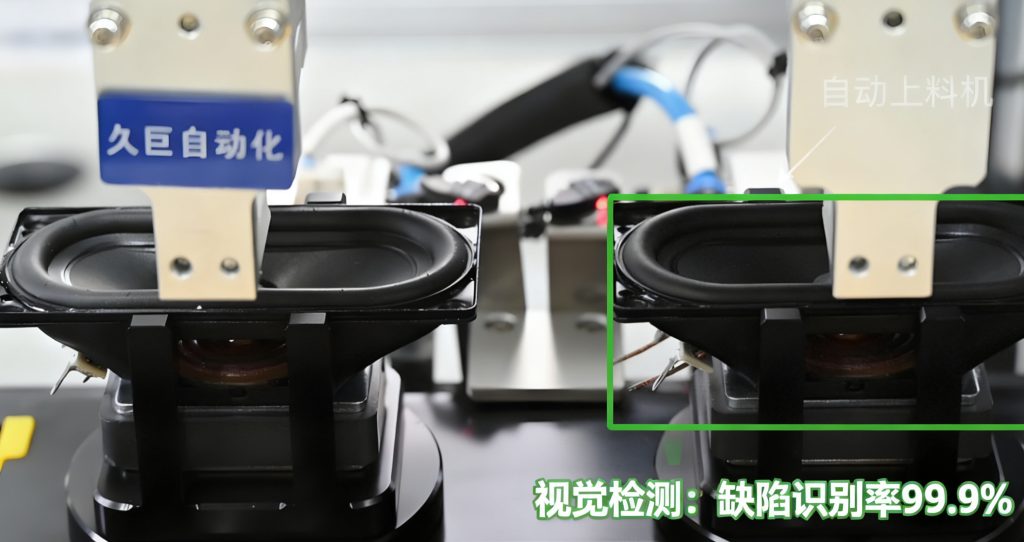
The starting point of the process isIntelligent Feeding SessionThe parts such as pot holders and magnets are accurately transported to the work station through the automatic loading machine, and the visual recognition system equipped with the equipment detects defects in the appearance of the parts first to avoid defective products from flowing into the next step - this step replaces the work of three manual quality inspectors, and the accuracy of the detection rate reaches 99.91 TP3T.
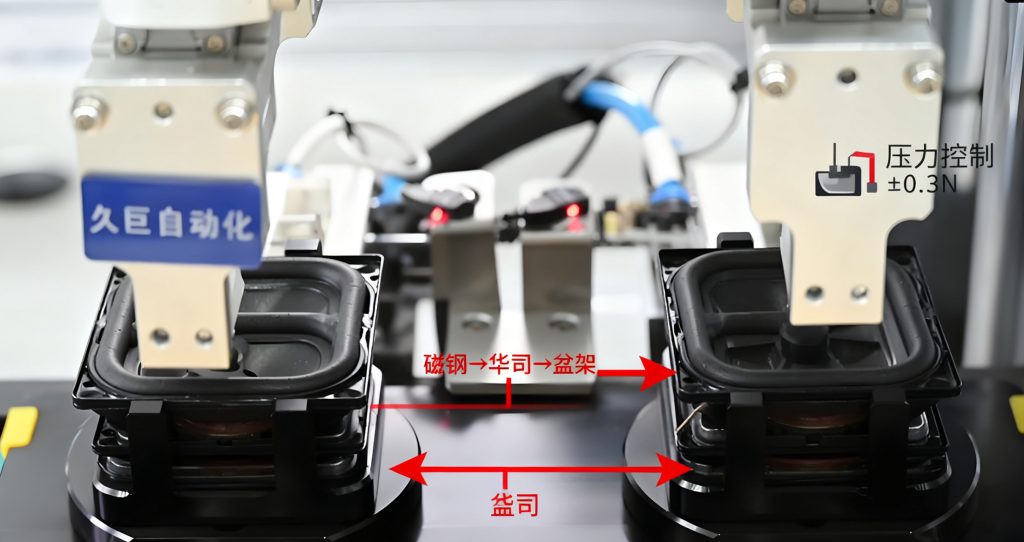
to be followed byMagnetic circuit assembly processThe magnetic circuit is placed in the designated position of the pot holder by the robotic arm, while the equipment applies constant pressure (error ±0.3N) to ensure that the magnetic circuit is closely fitted. “When manually installing the magnetic circuit, the magnets are often shifted due to uneven strength, which affects the uniformity of the magnetic field,” said JiuJu's technical engineer, “Our equipment can make everySpeaker Motor Assembly MachineThe magnetic circuit gap is controlled at 0.15mm±0.01mm, which is the key to guaranteeing the stability of sound quality”.
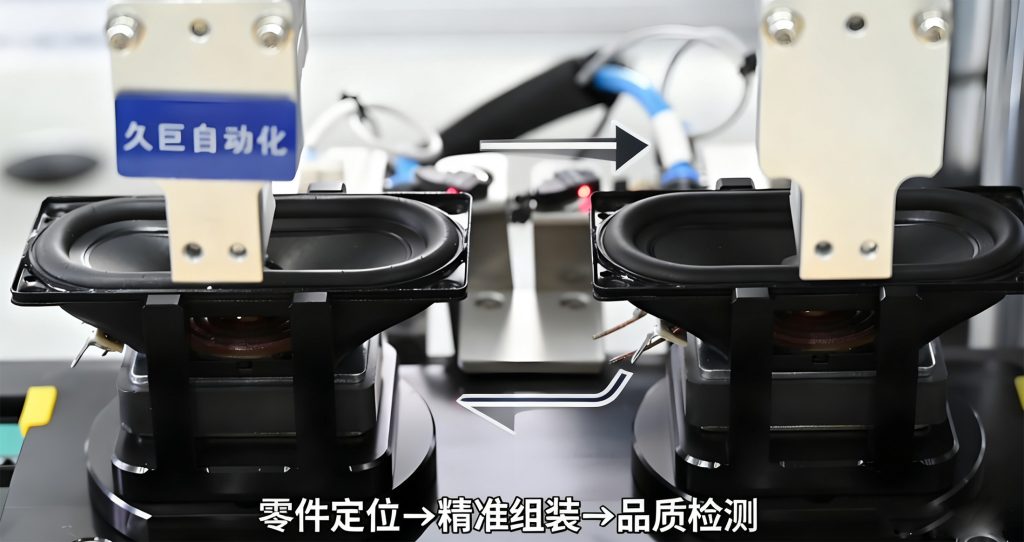
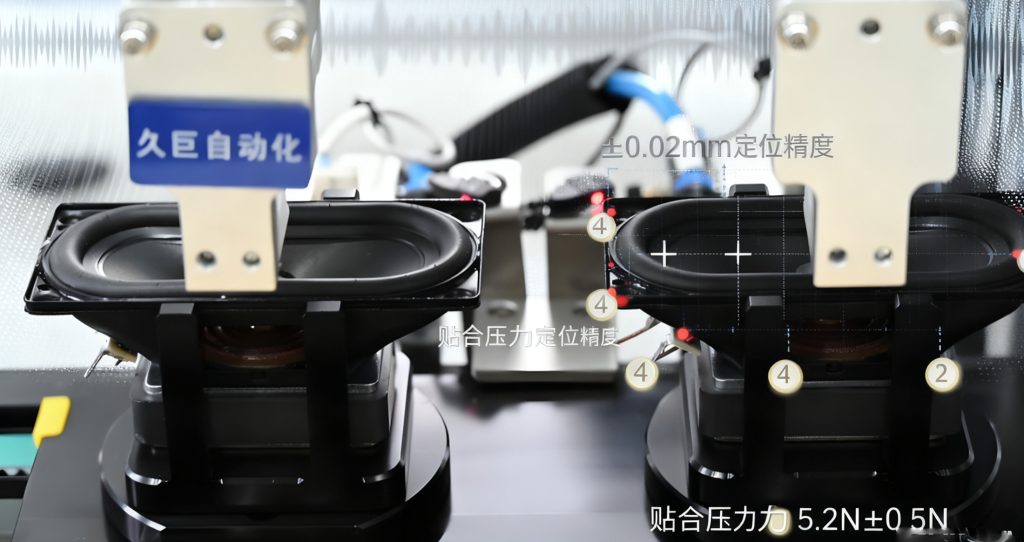
The core of the diaphragm lamination link is exactly the scene shown in the picture on the site: dual-station robotic arm synchronized grabbing diaphragm, aligned with the cone frame with a positioning accuracy of 0.02mm, while the pressure sensor provides real-time feedback on the lamination strength to ensure that the diaphragm edges and the cone frame fit with an error of less than 0.05mm - a step that directly determines the speaker's This step directly determines the consistency of the speaker's frequency response curve, and the error of manual assembly usually exceeds 0.2mm, leading to obvious differences in the sound quality of different speakers.
Subsequent wiring welding, dust cover assembly and other processes, the equipment has also realized automation: automatic soldering machine temperature control at 350 ℃ ± 5 ℃, to avoid false welding or hot parts; dust cover fit, the equipment will be airtight detection, to prevent the speaker into the ash affect the service life.
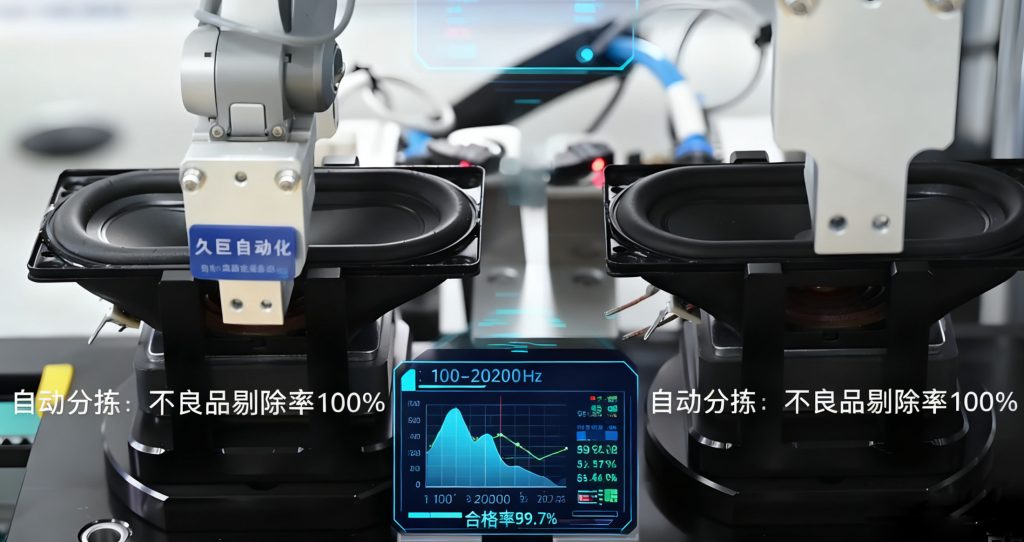
endFinished product testing sessionAfter each speaker is assembled, it will be automatically connected to the acoustic inspection system to collect the frequency response curve of 100-20000Hz and compare it with the standard curve, and the unqualified products will be automatically sorted out - the whole process, from the input of parts to the finished product off the line, will take only 90 seconds/unit, and the whole process does not require human intervention.
After an audio manufacturer introduced this line, it not only realized “zero manual assembly” of TV speakers, but also made the sound quality pass rate of the finished product increase from 89% to 99.7%, and the sound quality complaints from end customers dropped by 92%.
 Horn automation jiujuauto



 简体中文
简体中文 English
 Tiếng Việt
 日本語
日本語 한국어
한국어 ไทย
ไทย हिन्दी
 বাংলা
বাংলা Français
 Español de Perú
 Русский